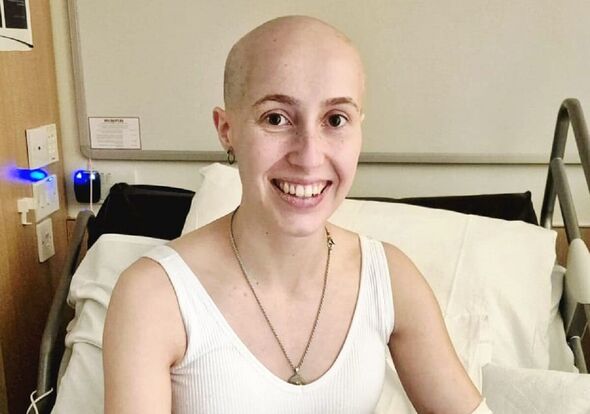

A 24-year-old twin given just six months to live after her leukaemia returned is attempting to raise £500,000 for potentially life-saving treatment abroad, saying the prospect of leaving her identical sister behind is "unthinkable". Caitlin Leggett, from Cardiff, was diagnosed with acute myeloid leukaemia – an aggressive cancer of the white blood cells – in April 2025, with a persistent rash being the only indication that something was seriously wrong.
Following months of gruelling chemotherapy and a stem cell transplant in December 2025, Caitlin achieved complete remission. However, in May 2026, doctors discovered the cancer had returned and the treatment options available to her on the NHS were unlikely to offer a cure.
With just six months to live under her current treatment plan, she has resolved to seek potentially curative care overseas – most likely in the US – where treatment and associated expenses could amount to £500,000. Caitlin's twin sister Grace Leggett, who has given up her position as a complex care personal assistant in Bristol to return to Cardiff to be closer to her family, said witnessing Caitlin's ordeal while facing the possibility of losing her sister within six months was devastatingly difficult.
"We're only 24 – nobody expects this to happen... Being twins as well, you're not supposed to have one twin not be there," Grace told PA Real Life. "It's unthinkable," Caitlin added. "We've gone through life together and I don't want our story to end here."
Caitlin and Grace have always shared an exceptionally close bond – even living together in a student house at the University of Bristol. Following her graduation in July 2024, Caitlin had set her sights on joining the Army, aspiring to train as an intelligence officer.

She had her mandatory medical assessment scheduled for April 2025, but in March that year she said she developed a rash that persisted despite applying over-the-counter creams from the chemist. Several weeks later, she said she visited her GP, who suspected she might have a virus and requested blood tests to examine further, which were conducted on April 3 2025.
She said she was told to attend the Llewellyn Teenage Cancer Trust unit at University Hospital of Wales in Cardiff the next day, and instantly recognised it was serious. At the appointment on April 4, 2025, she received a diagnosis of acute myeloid leukaemia (AML) – an aggressive cancer affecting the white blood cells.
According to the NHS, symptoms of AML can include appearing pale, experiencing tiredness or weakness, shortness of breath, unusual and frequent bruising or bleeding, and unintentional weight loss, but Caitlin said she displayed none of these warning signs – merely the peculiar rash, which can also indicate blood cancer. Upon discovering that treatment would require a stem cell transplant, substituting the eliminated cancerous cells with healthy stem cells from a donor, the entire family underwent testing to determine whether any could provide a suitable match.
According to blood cancer and blood disorder charity DKMS, more than 2,000 people each year in the UK require a blood stem cell transplant, yet just 7% of the entire eligible population in the UK are registered as potential donors. Both Caitlin and her sister Grace had signed up as stem cell donors "years and years ago", with Grace initially told she would likely be a compatible match for her sister.
Throughout their lives, the pair had believed themselves to be fraternal twins, meaning there was a strong possibility that Grace's stem cells would be accepted by Caitlin's body and assist in her recovery. However, genetic testing carried out in June 2025 revealed they were in fact monozygotic twins — meaning they were identical.

"I always wished I was an identical twin – I liked being a twin, but being an identical twin is a bit cooler," Grace said. "It's really weird to think that I'm basically Caitlin!"
This revelation proved to be a significant setback for Caitlin's treatment — given their near-identical DNA, Caitlin explained that "the whole concept of the transplant wouldn't work" as the body must recognise the stem cells as foreign in order for them to target the cancerous cells. Sadly, no other family members proved to be a suitable match either.
While awaiting an alternative donor from the register, Caitlin achieved remission in May 2025 following two months of chemotherapy. However, in August 2025, she learnt that the cancer had returned to her skin – an unusual relapse which, she said, was worsened by challenges in locating a suitable stem cell donor.
Caitlin subsequently participated in a menin inhibitors clinical trial in Manchester to eradicate the leukaemia in her skin, which proved successful and placed her into complete remission – precisely what her consultants required before her stem cell transplant, as it provides a greater chance of success. She was allocated another transplant date in December 2025 with a different donor.
However, a week prior to this second transplant date, the cancer reappeared in her skin. She was still able to undergo the transplant, which occurred in December 2025, but required additional full-body radiotherapy beforehand. The treatment was considered successful and she was informed she was in remission again in January 2026.
Caitlin was subsequently scheduled for monthly bone marrow monitoring for three months, to verify that the cancer had not returned, which were set to reduce to quarterly tests from March 2026, "but I wasn't too happy about that", she explained.
"I didn't feel like it was safe to just go straight to three, so I persuaded my consultant to give me an extra one in May," she said. "On that extra one, they found that the leukaemia had come back. Initially, the blast count came back at 5.7%, just over remission, but then about a week later it went up to 37%. So it's quite fast-growing."
Since May 2026, Caitlin has been participating in a further drug trial for Bleximenib and is awaiting news on whether her body will respond positively. Her medical team have confirmed there is an additional drug trial available should this prove unsuccessful – however, she has been warned that neither treatment offers a cure. She has also been informed that a second stem cell transplant cannot be carried out in the UK, with doctors estimating that her current treatment plan will extend her life by just six months.
As a result, she has resolved to seek curative treatment overseas – with specialised leukaemia care in America or CAR-T cell therapy, a form of immunotherapy, available in China or Singapore, both of which carry a price tag running into hundreds of thousands of pounds. Caitlin and Grace have launched a GoFundMe page entitled Saving Caitlin, aiming to raise £500,000 to fund the costly overseas treatment, along with travel, accommodation and living expenses for accompanying family members, and are "appealing to anyone and everyone to help us in this fight".

Without the necessary funds being raised, Caitlin faces the grim reality that she may not reach her 25th birthday. "It's incredibly difficult to think about," Caitlin said.
"At 24, I always assumed I had my whole life ahead of me. There are so many things I still want to do, places I want to see, and memories I want to make with the people I love.
"What I would miss most isn't one particular event, it's the chance to keep living an ordinary life with the people I love and growing older alongside my twin sister. Those are the things that matter most to me, and that's why I'm doing everything I can to find another treatment option. I don't want to miss out on the future we always thought we'd share together."
Those wishing to support Caitlin can donate to her fundraising page.