
The pump price of petrol is edging toward record territory as the Iran war tears through global oil markets, with Goldman Sachs putting a $150 barrel on the table by month's end — a figure that would dwarf the $116 peak recorded when Russia invaded Ukraine.
Brent crude pushed past $104 on Sunday night for the first time since autumn 2023, having closed Friday at $92. In the most extreme scenarios reportedly being discussed by traders, the price could reach $250 a barrel — a level that would be without modern precedent.
Howard Cox from FairFuelUK has put the threat in stark terms for British drivers. Every dollar above $100, he warned, could add 10-20p per litre to petrol and diesel "within weeks." He added: "If it reaches $120, I believe it will trigger a recession."
The numbers on forecourt boards are already moving. Diesel has surged 8.6p in seven days to a 16-month high of 150.97p, while petrol climbed 4.7p to average 137.51p on Sunday night. The all-time petrol high of 191.5p per litre — hit during the Ukraine war — is now within range. A full tank for a family car could top £100 for the first time in years.
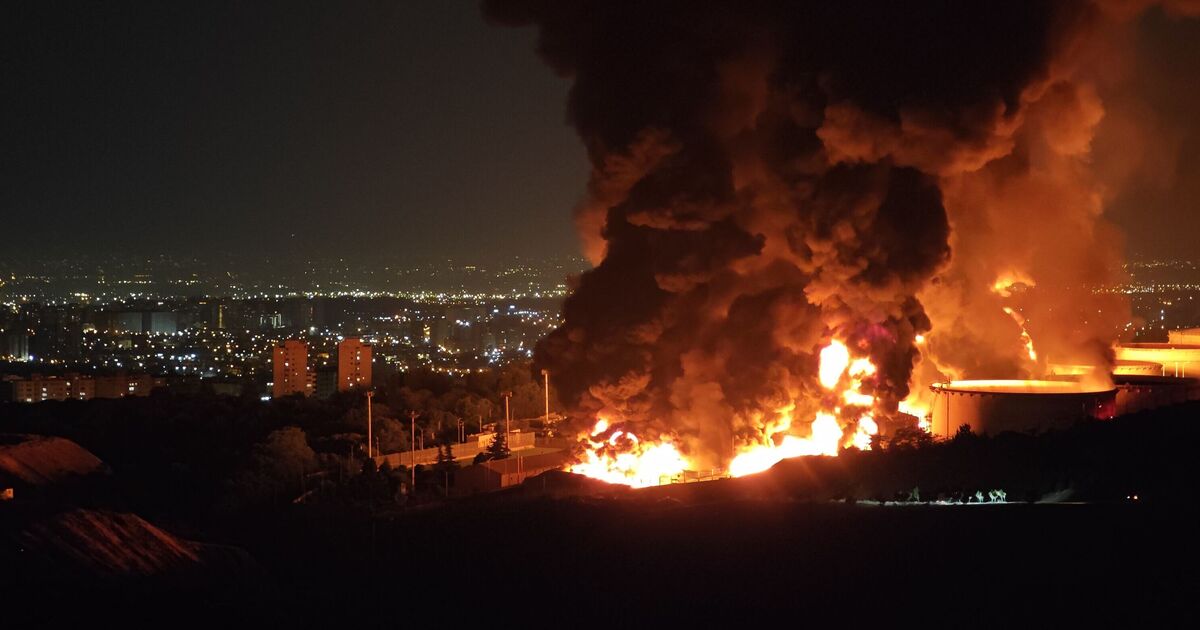
The trigger for Sunday's price spike was a wave of US and Israeli strikes on Iranian oil infrastructure. GB News reported six people were killed as thick black smoke rolled over Tehran, with Sharan — one of the country's biggest storage facilities — among the sites hit. Residents received official warnings about acid rain from the toxic cloud drifting across the capital.
Tehran's response was to intensify its own campaign against Gulf neighbours who rank among the planet's biggest oil exporters, states the report. Kuwait pulled back production on Saturday and declared force majeure on shipments without specifying the scale of the cuts. In the UAE, a fire erupted in the Fujairah oil zone after unidentified debris came down. Saudi Arabia said its air defences intercepted a drone closing in on the Shaybah oil field.
Iran had already put the world on notice that it would "set ablaze" any tanker trying to pass through the Strait of Hormuz — a chokepoint carrying a fifth of the planet's liquefied natural gas and oil. This weekend a single tanker made the crossing where dozens would normally pass. US Energy Secretary Chris Wright said the disruption was unlikely to clear for weeks.
Emmanuel Macron became the first Western leader to call directly on Iran's president to reopen the strait.
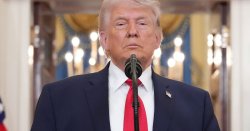
The president showed little interest in the price alarm. As crude punched through $100 for the first time in four years, he took to Truth Social: "Short term oil prices, which will drop rapidly when the destruction of the Iran nuclear threat is over, is a very small price to pay USA and world, safety and peace."
He signed off: "ONLY FOOLS WOULD THINK DIFFERENTLY!"
Press secretary Karoline Leavitt called the rise a "slight increase" and pointed to long-term gains. She told Fox News: "This is a short-term disruption for the long-term gain of taking out the rogue Iranian terrorist regime and finally ending their restriction of the free flow of energy in the Middle East and in the Strait of Hormuz."
The war price shock lands on top of a pre-existing squeeze. Labour has pencilled in a 1p fuel duty rise for September, followed by 2p in December and another 2p the following March.
Shadow Chancellor Sir Mel Stride said: "The latest developments in the Middle East make it even more important for Rachel Reeves to reverse course and scrap the rise in fuel duty."
UK gas storage is running at under two days' supply, though National Gas has described the level as unremarkable for this time of year.