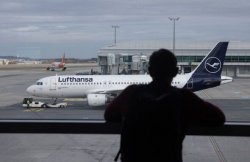
Lufthansa has released a statement following warnings from energy chiefs that Europe has just six weeks' worth of jet fuel remaining. Fatih Birol, executive director of the International Energy Agency (IEA), cautioned that flight cancellations could occur ''soon'' if oil supplies continue to be disrupted by the Iran conflict.
When contacted for comment, Lufthansa said that it believes it is better positioned than most rivals concerning its kerosene needs, reports the Mirror. A spokesperson for the carrier said: "The Lufthansa Group has secured ('hedged') approximately 80 per cent of its kerosene requirements for 2026.
"And approximately 40 per cent for 2027 based, among other things, on the price of crude oil - both at pre-crisis price levels. With this level of hedging, we are in a better position than most competitors."
This comes as the airline revealed it will axe 20,000 short-haul flights from its summer timetable to cut costs amid soaring jet fuel expenses. The majority of these reductions stem from the closure of its loss-making CityLine operation and the grounding of its 27 aircraft. The carrier highlighted that jet fuel prices have more than doubled and referenced industrial action involving its staff.
A statement on the Lufthansa Group website reads: "In total, 20,000 short-haul flights will be removed from the schedule through October, equivalent to approximately 40,000 metric tons of jet fuel, the price of which has doubled since the outbreak of the Iran conflict. The schedule adjustments reduce the number of unprofitable short-haul flights across the Lufthansa Group network.
Read more: Major airline cancels 20,000 flights - urgent message sent to passengers
Read more: Lufthansa issues update for all passengers with flights booked
"The planned consolidation of the European network is being carried out across Lufthansa Group's six hubs in Frankfurt, Munich, Zurich, Vienna, Brussels, and Rome. Passengers will therefore continue to have access to the global route network, particularly long-haul connections. However, due to the increase in jet fuel prices, this will be achieved significantly more efficiently than before."
On Tuesday, April 21, the Prime Minister convened a meeting of the Middle East Response Committee, where ministers and officials gathered to discuss the Government's efforts to alleviate the pressures stemming from the Iran conflict. A government spokesperson said: "The discussion focused on the Government's ongoing work to ease pressures being felt here in the UK.

"This included the diplomatic activity to promote progress on negotiations, and bring back security and stability for the region, and the military planning to restore freedom of navigation in the Strait of Hormuz. The Prime Minister acknowledged that the impact of the war in the Middle East will be felt beyond the end of the conflict, and stressed the importance of protecting British families.
"They discussed a range of ongoing contingency planning, such as our work with fuel suppliers, airlines and international counterparts, to ensure people keep moving and businesses are supported. UK airlines are clear that they are currently not seeing a shortage of jet fuel, and it is right that the Government continues to work with industry to ensure we closely monitor the situation.
"They said it was right that this Government is introducing wider measures to strengthen long-term resilience, including measures announced today to accelerate breaking the link between gas and electricity prices to support families and businesses under pressure and exposed to volatile gas prices."