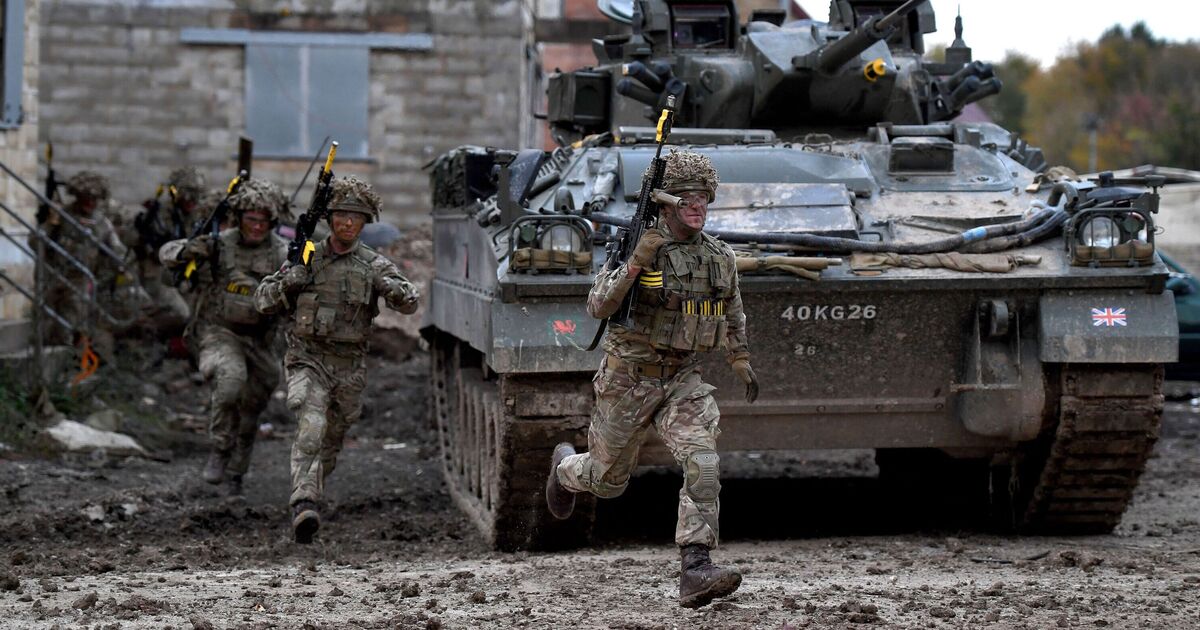

British households could be equipped with official "survival guides" as growing global threats force officials to prepare for a World War 3 scenario. The UK Government is reportedly set to update its War Book framework, last revived during the Cold War era, including new measures designed to prevent hostile powers such as Russia from launching cyber and infrastructure attacks across the country. While its contents are being kept tightly under wraps, the War Book will likely include detailed reports on ensuring British food security and the supply of necessary medicine, energy and industrial components in wartime, to be used behind closed doors by Government and military officials.
Ministers are also considering introducing a public booklet, instructing households across the country how best to prepare for the outbreak of conflict, according to the i newspaper. The revised War Book is expected to be completed by the end of the year, as fears continue to grow about Britain's vulnerability on the world stage.
Russia has already engaged in forms of covert warfare against Britain and its European allies, including running submarine operations near undersea cables.
A Russian attack submarine and two spy submarines were tracked loitering near critical undersea infrastructure in the High North last month, prompting Defence Secretary John Healey to warn Vladimir Putin that any attempt to damage cables and pipelines would have "serious consequences".
News of the WW3 preparation plans comes after NATO chief George Robertson accused political leaders of "corrosive complacency" in a blistering commentary on UK security earlier this month, warning that Britain is "underprepared, underinsured and under attack".
Speaking in Salisbury on April 14, Lord Robertson of Port Ellen said: "We are not safe... Britain's national security and safety is in peril.
"There is a corrosive complacency today in Britain's political leadership. Lip service is paid to the risks, the threats, the bright red signals of danger."
The Government has courted criticism over its delay to publish the long-promised 10-year defence investment plan intended to deliver the Strategic Defence Review, with Sir Keir Starmer previously stating that the plan is being finalised, but internal disagreements thought to be slowing progress.
Lord Robertson's warnings also reflect a growing concern inside defence circles that Britain's armed forces are not equipped to deal with modern threats because of issues including manpower and equipment shortages.
Ministers have pledged to raise defence spending to 3% of GDP by the end of the next parliament with a longer-term ambition of 3.5% and the Government has committed to delivering the Strategic Defence Review alongside "the largest sustained increase in defence spending since the Cold War", totalling over £270 billion over the current parliament.