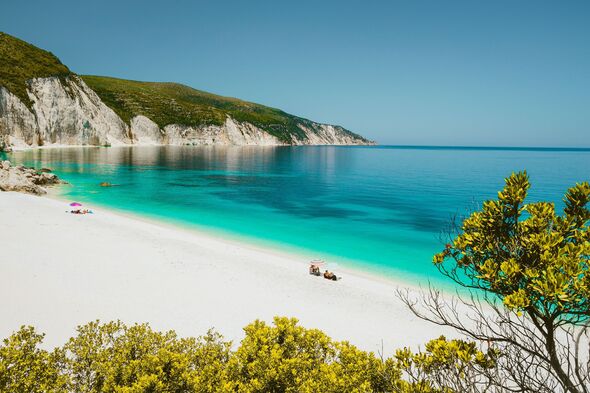

Europe is home to thousands of spectacular beaches, which means holidaymakers are spoiled for choice every summer. Spain, Portugal and Italy, in particular, have some of the most pristine stretches of sand. But a new ranking has revealed that the old continent’s number one beach is not in either of those countries.
Instead, it is tucked away in Greece. The list was compiled ahead of the holiday season by World’s 50 Best Beaches, with more than 1,000 travel professionals nominating their favourite spots. Beaches were judged on eight criteria, including wildlife and untouched nature, the “soundtrack of nature”, calm waters, crowd levels and how often conditions are idyllic.
READ MORE: Cheapest European beach destination for 2026 is ‘absolutely wonderful’
READ MORE: One of Europe's longest beaches is 13.6 miles long and rarely overcrowded

The top spot went to Fteri Beach in Greece, which lies on the north coast of Kefalonia in the Ionian Sea.
It is surrounded by white cliffs and a stretch of white pebbles mixed with sand, leading into clear turquoise waters.
Its secluded location has also helped preserve its natural beauty. Visitors can reach it either by hiking down a steep two-kilometre trail or by taking a water taxi from Zola port.
There are very few facilities, so travellers are advised to bring water, food and sunscreen.
Those who have visited have shared glowing reviews online. One person wrote on TripAdvisor: “Such beautiful waters are hard to see! Of course it requires an effort because they are only accessible by a mountain path, but it is absolutely worth it!”
Another added: “Fteri Beach is the real deal - glistening turquoise water, towering white cliffs, and the kind of peaceful silence you want to bottle and take home.”

A third wrote: “We were told that Fteri was the most beautiful beach in Kefalonia! I totally agree! This beach is breathtakingly beautiful. The colour of the water is a very particular blue. Given the heat, we went there by taxi boat.”
Someone else commented: “Fteri Beach is a stunning spot, but the hike to get there is long and tough, with challenging terrain. If you have trouble walking, I suggest taking a boat instead, which is easier and faster. Once you arrive, you’ll be rewarded with crystal-clear waters and beautiful natural surroundings. Whether you hike or take the boat, Fteri Beach is well worth the visit.”
However, like many European beaches, Fteri is much busier at the height of summer.
High season peaks in July and August, when temperatures are at their hottest and schools are on holiday across Europe.
During these months, the beach can feel far less secluded than its photos suggest, particularly in the middle of the day when boats begin arriving.
Travellers looking for fewer crowds may prefer June or September. The weather is still warm and sunny, but visitor numbers are lower.

The Ionian Sea is generally much calmer from June through October, which is considered the best time of year to visit.
Outside of those months, stronger winds can make boat access more difficult and the water less inviting.
Because the beach is remote and space is limited, timing your visit can also make a big difference.
Arriving early in the morning gives you the best chance of enjoying quieter conditions before day-trippers and boat taxis begin to arrive. Late afternoon can also be calmer once some visitors have left.
As far as other European beaches are concerned, Spain and Italy still dominated the wider top 20 list, with six Spanish beaches and four Italian spots included.
Here is the full list of Europe’s 20 best beaches for 2026:


