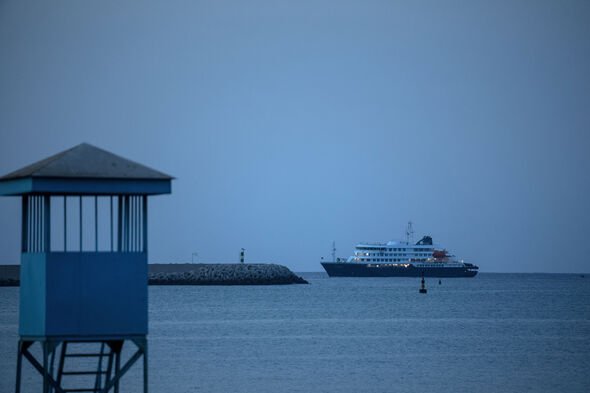

The regional government of Spain's Canary Islands has opposed the docking of the MV Hondius cruise ship, the vessel at the centre of a fatal hantavirus outbreak. Spanish authorities had said they have a "moral and legal obligation" to permit the passengers ashore, after the ship's intended destination, Cape Verde, refused.
Regional leader Fernando Clavijo has requested an urgent meeting with Prime Minister Pedro Sanchez to discuss the issue. He said: "This decision is not based on any technical criteria, nor is there sufficient information to reassure the public or guarantee their safety. I cannot allow it to enter the Canary Islands."
Read more: Keir Starmer shares hantavirus outbreak 'wider public risk' update
Read more: Major update on hantavirus cruise as sick Brit faces high seas rescue mission
Three passengers have died and the World Health Organization (WHO) is monitoring seven cases in total in the hantavirus outbreak. Two cases have tested positive for the virus, which is usually spread by inhaling contaminated rodent droppings. Health officials are investigating whether limited human-to-human transmission has occurred on board.
Oceanwide Expeditions, the ship’s operator, said two specially equipped aircraft were flying to Cape Verde to evacuate two passengers needing urgent medical care and one companion of a German woman who died on board on Saturday. The three individuals are due to be flown to the Netherlands. Once the medical evacuations are completed, the company had planned to sail the vessel to the Canary Islands – either Gran Canaria or Tenerife – a voyage of around three days, subject to approval.
Footage obtained by The Associated Press shows deserted decks and gathering areas on the ship, with medical teams in protective gear. Nearly 150 passengers and crew are on board, with passengers isolating in their cabins as directed by the WHO.
The ship departed Argentina on April 1 for a polar cruise visiting Antarctica and remote South Atlantic islands. A Dutch man died on board on April 11. His body was later disembarked on the British territory of St Helena. His wife, who flew from St Helena to South Africa, collapsed at Johannesburg airport and died in hospital on April 26. A British man was taken off the ship at Ascension Island and remains in intensive care in South Africa. Three people on board are currently reporting mild symptoms.
Passenger Qasem Elhato, 31, who sent video footage to the AP, said via WhatsApp that days had been “close to normal” while awaiting a solution from authorities. He added: “Morale on the ship is high and we’re keeping ourselves busy with reading, watching movies, having hot drinks and that kind of things."
Fellow passenger Helene Goessaert told Belgian broadcaster VRT: “We are all in the same boat, literally.” She said information was provided regularly and fresh fruit and vegetables had been delivered to the vessel.
Cape Verde authorities sent teams of doctors, surgeons, nurses and laboratory specialists to the ship. Officials in the capital Praia have stepped up safety protocols near the port. The ship operator has implemented its highest level of response, including isolation measures, enhanced hygiene protocols and medical monitoring. Passengers have been wearing masks and social distancing.
Argentine officials confirmed no symptoms were present when the ship departed. The WHO noted there are no reports of rats on board and believes the initial infection likely occurred before embarkation. South African authorities are conducting contact tracing but have emphasised that the chance of a major public health threat remains low.
MORE TO FOLLOW