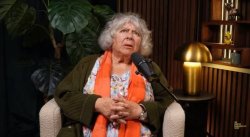

Susan Hampshire revealed she had no regrets caring for her late husband after he was diagnosed with dementia. The Forsyte Saga and Vanity Fair actress, 89, gave up her career to look after entrepreneur and philanthropist Sir Eddie Kulukundis, who died at the age of 88 in 2021. He had been living with dementia and was nursed by his wife Susan during his final years.
In an exclusive interview with Express.co.uk, the British actress opened up about her personal experience caring for her late husband and why she feels so strongly more needs to be done to spot the signs of dementia, including the link with hearing loss. The London-based star has raised more than £1m in Sir Eddie's memory for Alzheimer's Research UK.
Although Sir Eddie had no issues with hearing loss for most of his life, Susan has noted a few of her friends have had a decline with their hearing. She has since partnered with Boots Hearingcare ahead of Dementia Action Week.
"I have a few friends who I noticed they weren't hearing," she explained, "but also their understanding and connection had sort of disappeared."
Read more: 'Lavish' period drama based on much-loved books airs on TV tonight
Read more: The Forsytes cast list in full as new adaptation of beloved novel airs

Susan continued.: "They seem to have gone downhill in the way that Eddie went downhill in maybe five years, in such a short amount of time. I wondered if it was their hearing. The truth is, I'm certain it is, but as I'm not a doctor...
They are not wearing a hearing aid and are completely deaf. I think that's a terrible disadvantage."
The actress, who became a household name for her roles in The Forsyte Saga, The First Churchills and Vanity Fair, had previously been working on the BBC series, Monarch of the Glen, but knew something had to give while caring for her husband.
She explained, "I was losing two nights sleep, plus working very long hours during the week and obviously worrying about Eddie. I wasn't with him, so I just decided that the best thing to do was just look after him, and I don't regret it for a minute. I'd do it again in a heartbeat."

Some people can experience dementia-related mood swings, frequently appearing as early symptoms from anger to sudden sadness, but Susan admitted Eddie was not like that.
She remarked, "I was very, very lucky. He remained good natured and sweet all of the time."
Addressing his symptoms, Susan said, "I noticed that he couldn't remember people's names and then suddenly couldn't remember who they were or if they had ever met before," she recalled. "Often I'd say, 'where are you going Eddie? ' And then he would say, 'I don't know.' So that was a clue."
She also noticed that Eddie didn't read newspapers as much as he used to depsite being an avid reader.
Susan shared, "He got confused as to where he was and not remembering all the words that your brain normally retains. He never wanted to speak on the phone because he didn't want to be asked a question where he would have to answer. Otherwise, he'd say, 'Susan, come here.' Then I would take the phone."
The TV star also addressed the struggles of working as a full-time carer.
"I would let him lie down [after lunch] and there are rails that you put up so Eddie wouldn't fall out of bed or go wandering," Susan commented. "I would go and sit in the car and calm down for say, half and hour, and restore myself. Then I would come back with the energy to look after him again."

Susan, an ambassador for Alzheimer’s Research UK, has partnered with Boots Hearingcare ahead of Dementia Awareness Week (May 19-25) to shine a light on an often-overlooked issue - the link between the progressive disease and hearing loss.
She is urging the public to go for a hearing a test. Research led by University College London suggests nearly half of dementia cases could be prevented by tackling 14 key health and lifestyle factors, including hearing loss.
The partnership will spotlight Alzheimer’s Research UK’s ‘Think Brain Health’ campaign, inspiring people to look after their brain health.
More than 18 million people in the UK live with some form of hearing loss, yet many wait an average of 10 years before seeking help. Meanwhile, dementia affects nearly one million people in the UK and is the leading cause of death nationwide, according to the Office for National Statistics (ONS).

Karen Shepherd, Director of Hearing Health Care Development at Boots Hearingcare said: "Untreated hearing loss can lead to social isolation, reduced communication and withdrawal from everyday activities, all of which are linked to cognitive decline. Addressing hearing issues early helps people stay connected, engaged and mentally active.
While hearing loss is one of the 14 risk factors linked to dementia, it is one of the most manageable. By getting your hearing tested and using appropriate treatments such as hearing aids when needed, individuals may be able to reduce their risk while also improving their quality of life.
A simple hearing test can be a powerful step in protecting your long-term health. If you’ve noticed changes in your or a loved one's hearing, book a free hearing test to ensure you receive the right support and treatment."
Emma Taylor, Information Services Manager at Alzheimer’s Research UK said: “It’s normal for our memory and thinking to slow down as we get older. But when changes begin to interfere with daily life, it may signal something more. This can be a sign that something else is going on, rather than just ageing.

Symptoms can include: memory loss, struggling to plan, confusion, difficulty with words or tasks, poor judgement, mood changes, social withdrawal, or problems understanding language. These signs don’t always mean dementia, but speaking to a GP early can help identify causes, access support, and allow for planning ahead.”
Susan is now helping to raise awareness that it is never too early or too late to take action, encouraging others to think proactively about their hearing health.
If you or a loved one are starting to notice signs of hearing loss, book a free hearing health check at https://www.bootshearingcare.com/book/.
For more information on Alzheimer’s Research UK or their ‘Think Brain Health’ campaign visit: https://www.alzheimersresearchuk.org