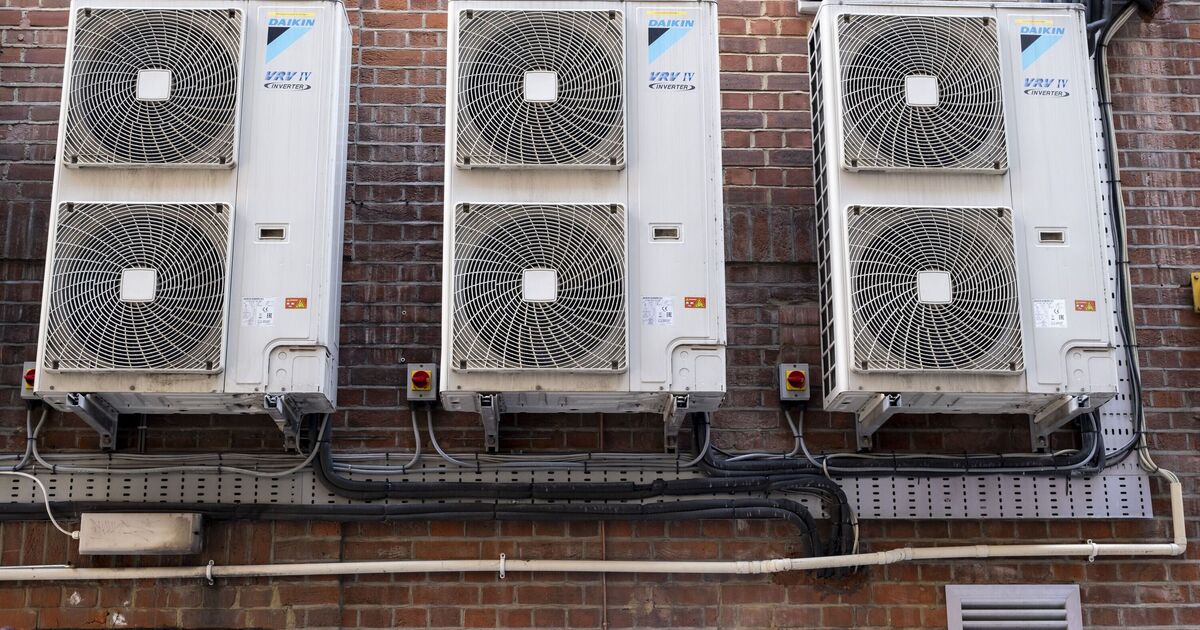

Air conditioning will become "unavoidable" for millions of Britons within a generation as summer temperatures spiral beyond what the country's homes, hospitals and schools were built to withstand, a top government climate adviser has warned.
Baroness Brown, of the Climate Change Committee (CCC), made the stark prediction as the body launched a major new report on how Britain must adapt to more intense flooding, heat and drought. She said cooling measures must now be "rolled out at scale", a significant shift in position from advisers who previously cautioned against widespread air conditioning use on environmental grounds.
Friday is forecast to bring 28C to parts of Britain, but the CCC's projections paint a far more alarming picture for the decades ahead, with Celsius readings of 40C expected to be a routine feature of British summers within 35 years.
Of all the climate threats facing the country, the report singled out intensifying heatwaves as the most dangerous to human health, a threat it said was already killing people and leaving expectant mothers sweltering in overheated wards.
Among its recommendations: legal limits on workplace temperatures, a requirement for hospitals and care homes to have cooling systems in place within a decade, and the same standard extended to schools by the middle of the century.
The committee also urged ministers to examine whether the school calendar itself needed redesigning, citing research linking higher temperatures to poorer exam performance among pupils.
Sky News reports that while sustainable cooling methods, shading, shutters and tree cover, should continue to play a role, the CCC acknowledged they would be too costly or impractical to install on many existing buildings. With extreme heat now locked into Britain's future, the committee said air conditioning had moved from a luxury to a necessity.
"Actually air conditioning is going to be essential, particularly in places where we have vulnerable people like hospitals and care homes," said Baroness Brown. "We think it's going to be unavoidable."
The CCC has already adjusted its emissions budgets to reflect the anticipated increase in air conditioning use, and noted that low-carbon heat pumps, which will eventually replace many gas boilers, are also capable of cooling homes.
Chris Michael, co-founder of portable air conditioner manufacturer Meaco, said demand was already climbing as summers "become hotter, and more consistently so." He said Britain's buildings were "not designed" for the temperatures ahead, adding: "This is one of the reasons why we are struggling."
Not everyone welcomed the shift. Campaigners at the Environmental Investigations Agency warned that widespread air conditioning would deepen the "urban heat island" effect that already bakes Britain's cities, and called for a ban on the HFC chemicals used in many systems. Previously, government advisers had themselves resisted mass air conditioning adoption on similar grounds, citing the energy and chemical use that contribute to the very warming it is designed to combat.
The CCC's report sounded a broad alarm about the future, warning that "the British way of life is under threat" from extreme weather. The numbers in the report are stark: nine in ten homes at risk of overheating, rivers running nearly half as high again at peak flow, and a daily water deficit that could hit five billion litres, all by the middle of this century.
For those living in the areas most exposed to flooding, the report raises the prospect of being asked to leave permanently in what the CCC terms "managed relocations", an acknowledgement that in some places, holding back the water will no longer be feasible. Along stretches of the Yorkshire, Norfolk and Suffolk coasts, the land is already disappearing at a rate of up to 4m every year.
Adapting to these changes will cost billions, but the CCC argued the bill would be far smaller than the damage caused by inaction. The Green Alliance thinktank called on "all political parties" to heed the report's findings, warning: "If they don't, voters will notice as the waters, temperatures and bills rise."