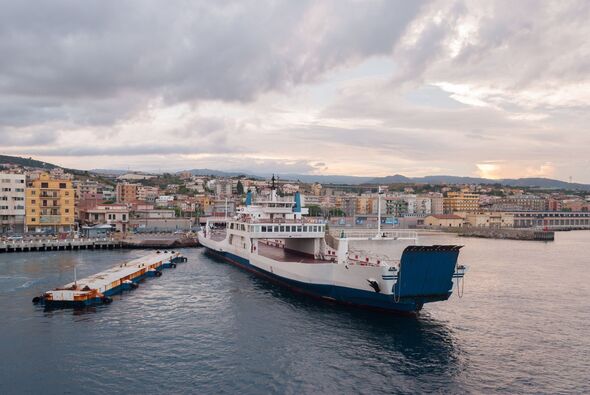

A unique sleeper train, the last remaining railway service in Europe that boards a boat as part of the journey, could be under threat due to plans for a new mega-bridge.
Trenitalia’s Intercity Notte (night train) has become a sought-after experience among rail enthusiasts who want to enjoy an epic 12-hour journey along Italy’s west coast. The train boards in Rome, splitting into two routes at Villa San Giovanni, with half the train being loaded on a ferry sailing to Sicily.

If you’re a heavy sleeper, you are unlikely to even notice the transition. The train is loaded onboard the boat and drives off the other end, so you wake up on the island of Sicily. However, many passengers choose to set their alarms and get up to watch the sunrise on the upper decks as they sail across the strait to Messina.
But an ambitious project to build the longest suspension bridge in the world, connecting Torre Faro in Sicily to Villa San Giovanni in Calabria on the mainland, could well make ferry services obsolete and mean trains could simply cross the new structure in minutes.
The Strait of Messina Bridge is set to cost around £12billion, and final approval was given for the project in August of last year. However, there have been many attempts to build a bridge between the island and the mainland over the years, which have gone on to be scrapped.

One challenge is that the strait is in an area of seismic activity, meaning engineers will need to make it earthquake proof. The project also needs approval from environmental agencies in the EU, and local residents whose properties currently stand in the way of construction.
The bridge, expected to be completed between 2032 and 2033, would span 3,300 metres, just over two miles, and have three road lanes in each direction as well as two service lanes and two rail tracks. Supporters claim the project could help create 120,000 jobs a year in the Sicilia and Calabria areas.
The bridge will connect with nearly 25-miles of road and rail links, 80% of them through tunnels, and be joined to the Autostrada del Mediterraneo, a major Italian motorway.
Not everyone is happy about the developments. According to a BBC report, some locals are opposed to the project, saying it will be "a cathedral in the desert" if not accompanied by investment in the regions it serves. It remains uncertain whether the train-ferry service would be scrapped once the bridge is constructed, so rail enthusiasts who want to give it a try shouldn’t wait too long to book.

Previously, other train-ferry services in Europe included the Vogelfluglinie, a service between Hamburg and Copenhagen. Until 2019, the train would be loaded onto the ferry for part of the journey, but this was discontinued due to works on the Danish side.
From 1936 to 1980, passengers could board the Night Ferry service from London Victoria, waking up the next morning in Paris Gare Du Nord. Trains were split overnight at Dover and loaded onto a ferry, before being unloaded in Dunkirk for the French leg of the journey. There were briefly plans to resume sleeper services from the UK to the continent after the Channel Tunnel was built, but the rise of budget airlines meant these were abandoned.
Have a story you want to share? Email us at webtravel@reachplc.com