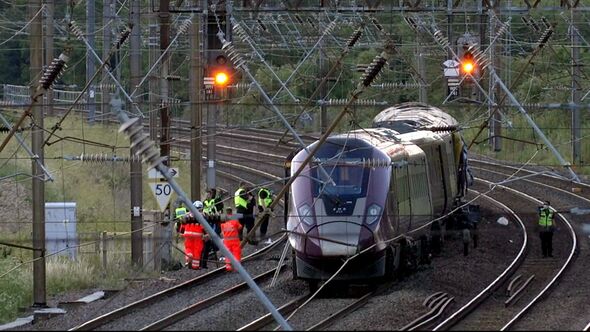

A train driver was killed and dozens of others were seriously injured when two passenger trains collided near Bedford.
The incident involved two East Midlands Railway (EMR) services, with one smashing into the back of the other on the same line shortly after 5pm on Friday.
A passenger on board one of the trains reported being “flung into the chair in front, and then I saw smoke”.
A train driver was killed, 11 suffered “very serious” injuries and 22 were seriously injured, East of England Ambulance Service said.

All patients with the most serious injuries have all now been taken to hospital.
A further 56 people sustained minor injuries and were treated at the scene or in hospital.
Most carriages of the two southbound trains remained on the tracks but at least one derailed.
The two trains involved were operating the 4.40pm departure from Corby and the 3.50pm departure from Nottingham, both to London St Pancras.
Passenger Pete Knapp described people “crying, screaming” and said some seemed to have major injuries.
I am being kept updated on the collision of two trains between Luton and Bedford. A number of people have been injured and I thank first responders who are helping those affected.
The @EastEnglandAmb is working with emergency services to support passengers who need further care. https://t.co/hlyeqqNhAW
— James Murray (@jamesmurray_ldn) June 19, 2026
The 40-year-old told the Press Association: “There was a moment of being flung into the chair in front, and then I saw smoke. People were crying, screaming, people were so scared and confused.
“I got up and I saw a lot of people who were unable to speak, had broken legs, and then I managed to get out of the train and because I’m quite thin I was able to squeeze out through the gap in the doors.”
Dr Knapp said he saw people with “life-threatening, major injuries, minor injuries” as well as “people with bandages, people who couldn’t see straight”, while others like him were still able to walk.
He said: “I’ve got blood all over my trousers and my back hurts like hell but I’m all right.”
He said he had not felt the train slow down before the crash but other passengers told him they had.
Prime Minister Sir Keir Starmer described the crash as “hugely concerning” and said he is “grateful to the emergency services for their swift response to this tragic incident”.
Air ambulance helicopters were on the ground after the collision happened just south of the Elstow interchange between the A421 and the A6.
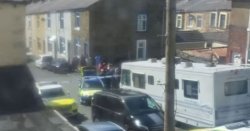
There was a long line of emergency vehicles on a rural road as emergency crews and passengers gathered in a neighbouring field.
Members of the public were asked to avoid the scene of the crash, while Bedford Hospital and Luton and Dunstable University Hospital both asked people not to attend their emergency departments “unless they have a genuine medical emergency” as they responded to the incident.

EMR trains to and from the London were suspended for the rest of the day.
Online train trackers show the rolling stock involved in the crash were a class 360 and class 810, with the front of the former hitting the rear of the latter.
EMR began rolling out class 810s in December last year, while class 360s are at least 20 years old.
A spokesperson for Network Rail, which manages Britain’s rail infrastructure, said: “We are supporting the efforts of emergency services on scene and our thoughts are with everyone involved.”
Meanwhile, Eddie Dempsey, the general secretary of the National Union of Rail, Maritime and Transport Workers (RMT), confirmed the person killed in the train crash near Bedford was the driver of one of the trains.
He said: “We are devastated to learn that a train driver and former RMT rep has tragically died as a result of today’s crash between Luton and Bedford. The thoughts of RMT are with their family, friends, colleagues and the Aslef trade union at this awful time.”
Dave Calfe, general secretary of the train drivers’ union Aslef, said: “Our thoughts tonight are with the family and friends of the driver who died in the crash near Bedford today and with the passengers who were injured in the accident.
“We want to thank the emergency services who responded so quickly, to help those on board, and are still at the scene.”
A team of Rail Accident Investigation Branch inspectors was on site to gather evidence.
The crash follows a collision between two trains in mid-Wales in October 2024 in which one passenger died and four other people were seriously hurt.
That was Britain’s first fatal crash involving multiple trains for more than a quarter of a century.