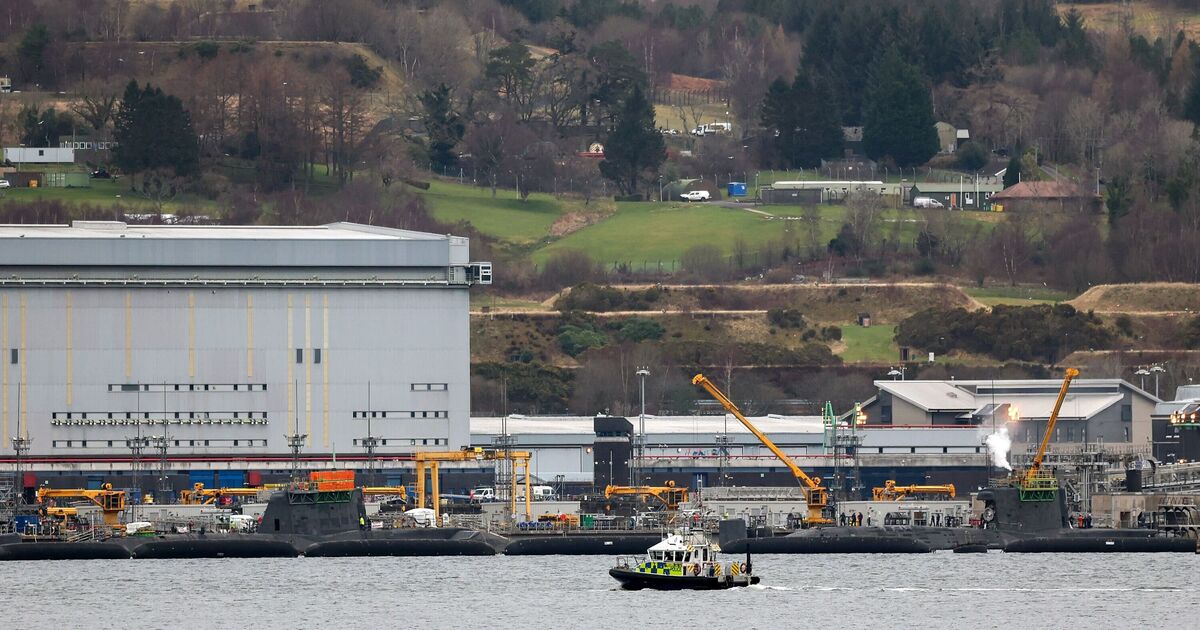

The home of the Royal Navy’s submarine fleet requires a “massive investment”, a defence minister has admitted. Ageing infrastructure at HMNB Clyde, also known as Faslane, has played its part in long-running availability issues of both the Navy’s Astute-class attack submarines and the Vanguard-class which carry the Trident nuclear deterrent missile.
Defence Readiness Minister Luke Pollard said the much-delayed Defence Investment Plan (DIP) will free up cash for the base. He said: “We need good facilities to dock the submarines, we need good facilities to maintain the submarines and we need good facilities for our people who work there. At the moment, it’s fair to say, what we inherited doesn’t deliver all three of those.”
Mr Pollard blamed “austerity policies" from the previous Tory government for leaving “a real backlog” of work that needs to be done at the base.
He told MPs on the Scottish Affairs Committee that they could “expect to see investment in Faslane, in particular in the DIP”.
He said: “We’re going to have to spend large amounts of capital spending upgrading the submarine infrastructure on the Clyde to make sure we can meet the threats we’re facing and we are dealing with a backlog of underinvestment, especially in some of those capital projects.”
The DIP was originally due to have been published in the autumn but has been repeatedly delayed due to a funding row.
Former defence secretary John Healey and armed forces minister Al Carns both quit Sir Keir Starmer’s Government amid concerns over spending.
Mr Pollard said he had “stayed to help complete the DIP when two of my colleagues resigned” and that people will not have to “wait very much longer” for its release.
The outgoing PM has insisted the plan will “completely overhaul” how funding is spent and will be published before he meets other NATO leaders at a summit in Turkey on July 7.
Reports emerged earlier this month that all five of the Navy’s Astue-class hunter-killer boats were in dock, awaiting maintenance and repairs.
The ageing Vanguard-class has also been having its own challenges, with increasingly long deployments in recent years amid maintenance issues.