
The UK boasts an extraordinary number of world-class beaches, scattered generously along its coastline. From the vast beaches of south Wales to the remote sands of Scotland and the staggering beauty of those on England's south coast, we are spoilt for choice.
The latest beach to be named the "best in Britain" is Traeth Llanddwyn (Llanddwyn beach) on the west coast of Anglesey in north-west Wales.
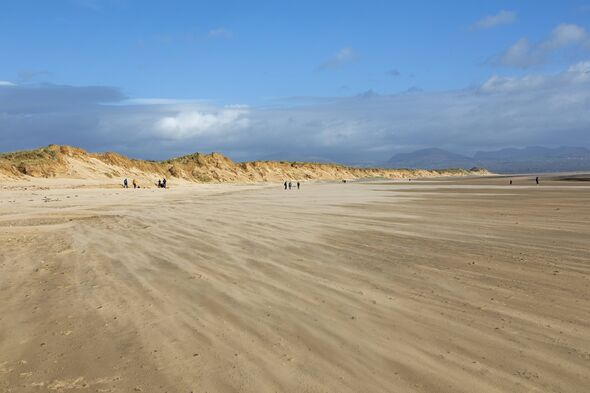
"When you see Llanddwyn for yourself, you'll think you've just stepped inside a dream," Time Out writes of the beach on which it bestowed the accolade, praising its "remote 3.5-mile stretch of white sand", "outstanding views of the Irish Sea" and "the peaks of Eryri National Park on the Welsh mainland".
Having admired countless photographs of the beach and island at Llanddwyn over the years — it is undeniably one of the most photogenic spots in Wales — I finally seized the opportunity to visit during a recent trip to Anglesey. Anglesey has recently been crowned "the happiest place to live in Wales" and is brimming with remarkable destinations, restaurants and bars.

My stay proved every bit as enjoyable as any foreign holiday, with Llanddwyn standing out as a highlight. There was just one problem: the countless photographs and videos circulating on social media have turned this spot into a viral phenomenon, and I was far from the only one who had noticed.
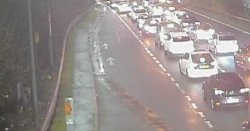
The situation has become so severe that residents of the nearest village, Niwbwrch (or Newborough), are increasingly frustrated and furious at the impact the overwhelming number of visitors is having on their daily lives, with gridlocked roads and reckless parking by tourists causing considerable disruption.


When I attempted to visit, I was taken aback to discover a row of bollards and high-visibility-clad marshals blocking the sole access road to the beach — a full two miles from the shoreline itself. This drastic measure is in response to tourists desperate to reach the beach parking illegally, clogging up residential streets and grass verges in and near Newborough Forest, through which all visitors must pass to access the beach.
North Wales Live reported how visitors who, like myself, were met with the roadblock became increasingly irate, with a series of confrontations causing traffic to tail back considerably. One man said: "I was stuck at the square, chatting to one of the lads on the 'road block'. His mate was having a debate with a chap in an Audi who wouldn't take no for an answer. Meanwhile, the traffic was backing up in all directions!" Residents are also reportedly furious at being "hemmed in by visiting cars and campervans, many parked on pavements obstructing prams and kids on bikes".


In May, Niwbwrch residents staged a "slow walk" to blockade the sole access road and Natural Resources Wales doubled the cost of parking at the 300-space beach car park in a bid to ease the problems.

Disappointed at being prevented from visiting a much-anticipated beach, my family and I drove a short distance before pulling over safely well outside the village and out of the way to consider our options. A remarkable stroke of fortune meant that by the time we had settled on an alternative destination and turned back, the road had reopened, allowing us to visit the beach after all.

Had the blockade still been in place, I would have fully understood and done my utmost to leave the area as swiftly as possible without causing any disruption to local residents. The issue of over-tourism is an increasingly pressing concern in several parts of the UK and appears to have worsened dramatically with the meteoric rise of social media platforms such as TikTok.

Nevertheless, the road leading to the beach and car park was clear, with a reasonable number of spaces available for visitors to arrive and depart in an orderly and safe manner. Before reaching the beach, visitors drive and walk through the breathtaking Newborough Forest, where the Corsican pine trees appear as though they have stood for centuries, yet were actually planted between 1947 and 1965 to supply timber and stabilise the equally spectacular sand dunes of Newborough Warren.

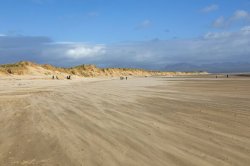
The beach itself is enormous - even a car park filled many times over wouldn't come close to making it feel busy. The western tip of the 3.5-mile long stretch of sand culminates at Ynys Llanddwyn (Llanddwyn Island), a rugged outcrop connected to the mainland except at high tide. Named after the 5th century Welsh patron saint of lovers, Dwynwen, its iconic lighthouse and crosses have established it as a magnet for photographers (and nowadays anyone with a social media account).

Regrettably, my young children weren't keen on the walk to the far end of the beach, so I had to settle for glimpsing the famous structures silhouetted against the evening sky and a shorter stroll along the beach so expansive that I barely ventured within 200 yards of another soul. It is absolutely worth the lengthy journey and visit - however, visitors should remain mindful at all times of the residents who call this stunning corner of the world home and avoid causing them any disruption.
Llanddwyn is renowned for its distinctive blend of beach, "island" and historic buildings. Yet it is far from the sole destination offering such a combination.

In Llansteffan in Carmarthenshire, visitors will discover a sweeping beach, dominated by a striking medieval castle perched dramatically on the clifftop above.

At Southerndown in the Vale of Glamorgan, there is not only a stunning beach along a heritage coastline, but also the walled gardens and remnants of Dunraven Castle.
Then there is St Govan's Head in Pembrokeshire, home to one of the most extraordinary structures in the British Isles — a hermit's cell hewn directly into the cliff face — as well as the breathtaking beaches of Barafundle and Broad Haven South just a short drive away.