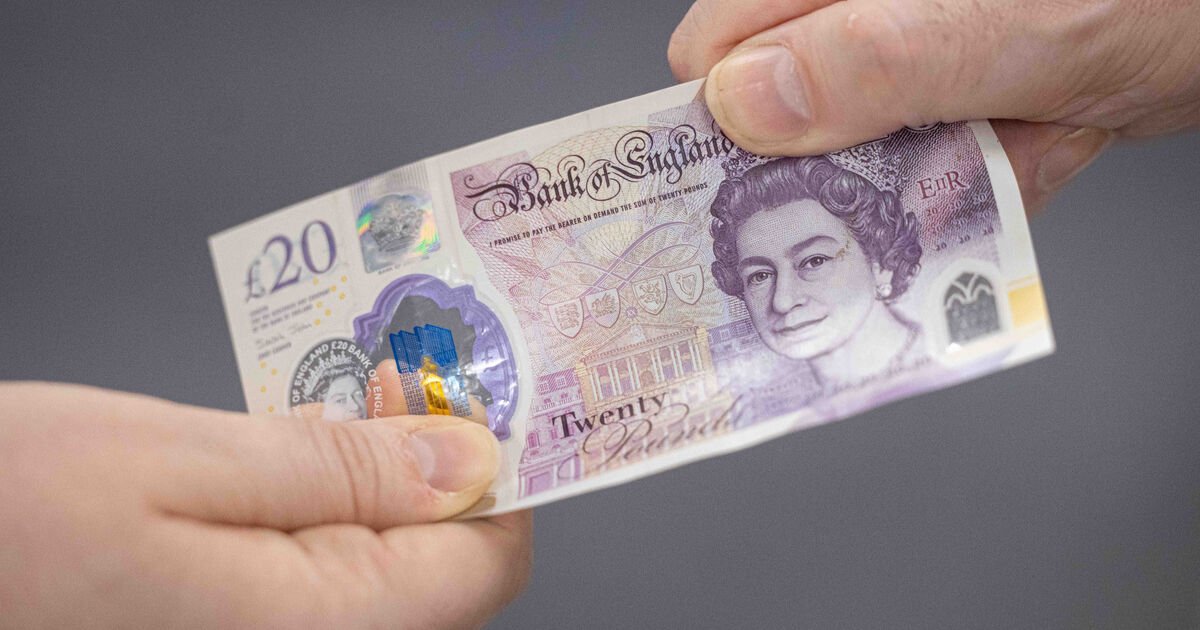

A Cabinet Office submission calling for a wider range of groups to be represented on future banknotes has reopened debate over the Bank of England’s decision to move away from historical figures.
Officials from the Office for Equality and Opportunity argued that figures such as Winston Churchill had represented only a "limited" view of British identity, while calling for greater visibility for women, disabled people, ethnic minority communities and LGBT+ individuals.
The comments were made in a letter sent to the Bank’s chief cashier last summer during a public consultation on future banknote designs.
The submission, released under the Freedom of Information Act after being obtained by The Telegraph, said: "Historical figures can powerfully anchor public memory but have historically reflected limited dimensions of British identity.
"Greater representation of women, disabled people, ethnic minority communities and LGBT+ individuals would send a strong signal of progress and recognition."
The Bank of England has decided that nature will be the theme for its next series of banknotes, ending a 50-year period in which historical figures featured on paper money.
The change has prompted criticism from some who argued that figures including Winston Churchill, Alan Turing and Jane Austen should continue to appear on Britain’s currency.
The Office for Equality and Opportunity is led by Labour’s Bridget Phillipson in her role as Women and Equalities minister.
Senior Conservative MP Alex Burghart, the shadow chancellor of the Duchy of Lancaster, said: "Labour tried to deny any involvement in the cancellation of Winston Churchill and other British heroes.
"But Government officials have been caught red-handed conspiring with the Bank of England to remove them from our banknotes.
"Banknotes should feature the greatest Britons – the historic figures that unite our country. They shouldn't be chosen on the basis of Labour's equality laws."
A Government spokesman said: "Decisions on banknote design are for the independent Bank of England, not ministers, and it has run its own public consultation as part of its work to periodically update notes so it can strengthen security features.
"Officials engaged with the consultation as part of normal due process – as they did under the previous government during the last review in 2013."
The Bank of England said nature was selected following a public consultation, with responses showing strong support for the theme, reprots the Daily Mail.
A Bank spokesman said: "To select the theme for our next series of banknotes, the Bank canvassed a range of opinion through a public consultation last year; the results of this consultation drove the decision to select nature as the theme.
"The nature theme received the highest proportion of nominations in the public consultation and received positive feedback in Bank-commissioned focus groups."
The Bank said the redesigned notes would create an opportunity to celebrate another important aspect of the nation, while also improving security features and making them easier to identify.
The new banknotes will continue to feature a portrait of the monarch and are not expected to enter circulation for several years.
The wildlife theme received the largest share of nominations in the Bank’s consultation, with 60 per cent of responses supporting it.
Architecture and landmarks was the next most popular option at 56 per cent, followed by notable historical figures at 38 per cent.
Other categories included arts, culture and sport at 30 per cent, innovation at 23 per cent and noteworthy milestones at 19 per cent.
More than 44,000 responses were submitted through online surveys, emails and designs from schools and members of the public.
Earlier this year, former Conservative chancellors Rishi Sunak, George Osborne, Jeremy Hunt and Nadhim Zahawi joined criticism of the decision to remove historical figures from future banknotes.