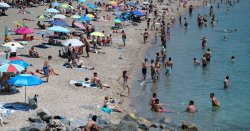
The Canary Islands are famed for the incredible variety of their beaches; Playa de Papagayo on Lanzarote has stunning white sands that contrast dramatically with the clear, blue water, while Tenerife’s Playa de La Arena has black volcanic sand.
But while tourists from all over Europe are drawn to the popular Spanish archipelago off the coast of Morocco, environmental campaigners have issued a stark warning about the quality of water on its beaches. Respected US travel guide Fodor’s has this year included the Canary Islands on its No List – a list of destinations that travellers should “reconsider."
The guide warns that 100 million litres of waste water that is virtually untreated are discharged into the sea around the Canaries "every day.”
And ATAN (Tenerife Association of Friends of Nature) has warned that "swimming in the Canary Islands poses a health risk".
Juan Rumeu, president of the Canary Islands Business Association of Environmental Consultants, said that discharges of raw sewage along the resort’s coast were “a very serious public health issue” and it can take up to three days for a beach to be closed after a discharge had been reported.

"It takes days to get the test results back,” Rumeu said. “What happens during the 72 hours before a beach is closed? What about all the people who swam there beforehand?”
One local, Alba Domínguez, told El Diario that it was becoming increasingly difficult to find a beach that was safe to swim in. "The first thing I check before choosing a beach is that there are no contamination warnings and that it isn't near areas that have been closed for the same reason," she said.
Alba added that when she was younger she and her family would spend entire summers at the beaches of El Médano. "Now, it’s one of the areas where I wouldn't go swimming, it’s completely out of the question," she said.
For example Leocadio Machado Beach, a popular spot in El Medano for water sports enthusiasts, was closed earlier this month due to high levels of E. coli detected in the water. On July 6, bacterial levels at the beach did not even meet the European minimums required for water quality. Some 800 CFU (Colony-Forming Units) of E. coli were reportedly detected per 100 ml of water.

The World Health Organisation has warned that hazards such as rotavirus, enterovirus, hepatitis A, and Salmonella can be found in raw sewage, potentially causing diarrhoea, fever, vomiting, respiratory illnesses, and skin infections, among other conditions.
While the City Council has stated the exact cause of contamination remains unknown, the beach was reopened for swimming on July 9.
In Lanzarote, the capital's main beach was closed for six months due to faecal contamination. In the popular tourist hub of Playa Blanca, in the south of the island, another beach was closed in June for the same reason.
In Gran Canaria, episodes of faecal contamination have been recorded at El Confital beach for over eight years, and swimming remains temporarily banned, according to the latest sampling data published in the National Bathing Water Information System.