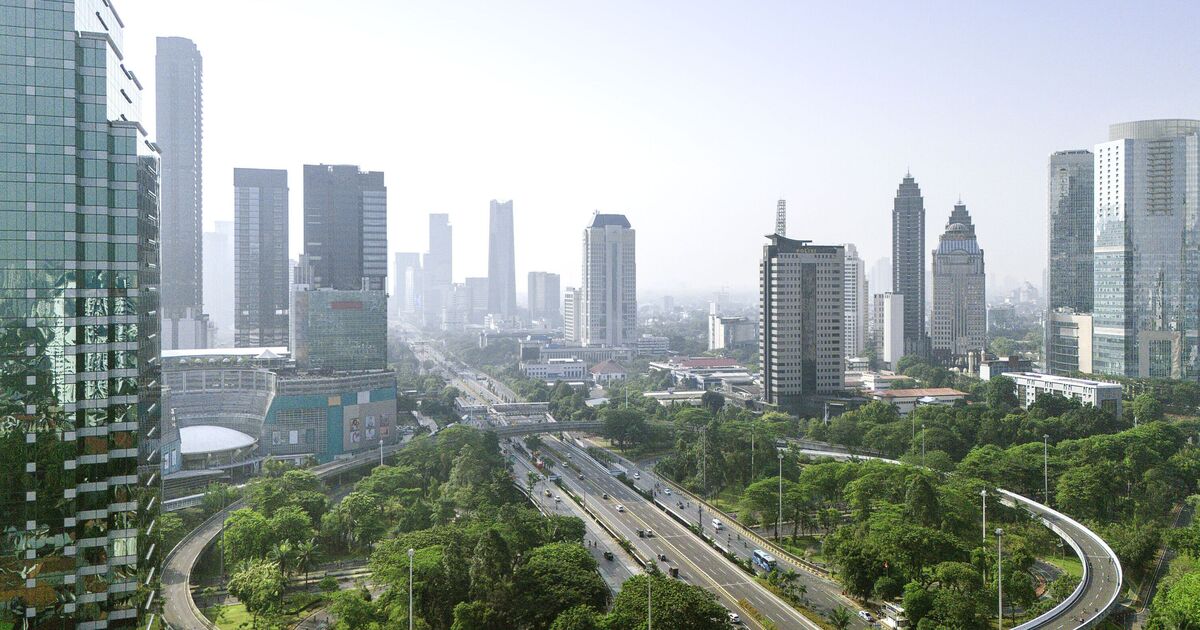

Construction of a major multi-billion-dollar project has kicked off this month in a huge Asian country. Indonesia, located between the Indian and Pacific oceans, has welcomed its long-awaited Abadi Masela liquefied natural gas (LNG) project. The $21billion (£15.8 billion) investment is one of the country’s largest energy developments ever, and is expected to dramatically increase domestic energy security.
Located in the Masela Block in eastern Indonesia, the project is being developed by Japan's Inpex Corp in partnership with Indonesia’s Pertamina and Malaysia’s Petronas. It is expected to be one of Indonesia’s largest sources of natural gas, with production scheduled to begin around 2029 or 2030.
Bahlil Lahadalia, Indonesia’s minister for energy and mineral resources, said the project is expected to produce 9.5million tonnes of LNG annually, along with 150million standard cubic feet per day of pipeline gas and 35,000 barrels of condensate a day.
The minister added that 60% of the gas output will be allocated to the domestic market, and that downstream industries, such as fertiliser production and feedstock, will be given priority.
The Abadi project will also involve carbon capture and storage technology in Indonesia’s first large-scale LNG developments, combining emissions-reduction measures from the outset.
Construction starting is major news for the country, as the project had been delayed for decades. The agreement, first signed in 1998, was delayed by years of exploration work, changes to the development plans and prolonged negotiations over investment.
In 2016, the Indonesian Government decided that the gas development would be constructed onshore rather than offshore. The project was redesigned and costs increased.
The Abadi Masela gas field contains an estimated 6.97trillion cubic feet (TCF) of natural gas reserves, making it one of Indonesia’s largest undeveloped offshore gas resources.
The country was once the world’s largest LNG exporter, but lost market share over the past two decades as output from ageing gas fields declined and new projects faced delays.
Indonesia uses most of its natural gas at home, with President Prabowo Subianto prioritising energy self-sufficiency in his administration. He is also focusing on the downstream processing of natural resources and drawing more foreign investment into strategic industries.
He said: “We must continue downstream industrialisation, which requires energy. Indonesia has abundant energy resources, and despite global uncertainties, we have the resilience and measures in place to keep the country on a stable course.”