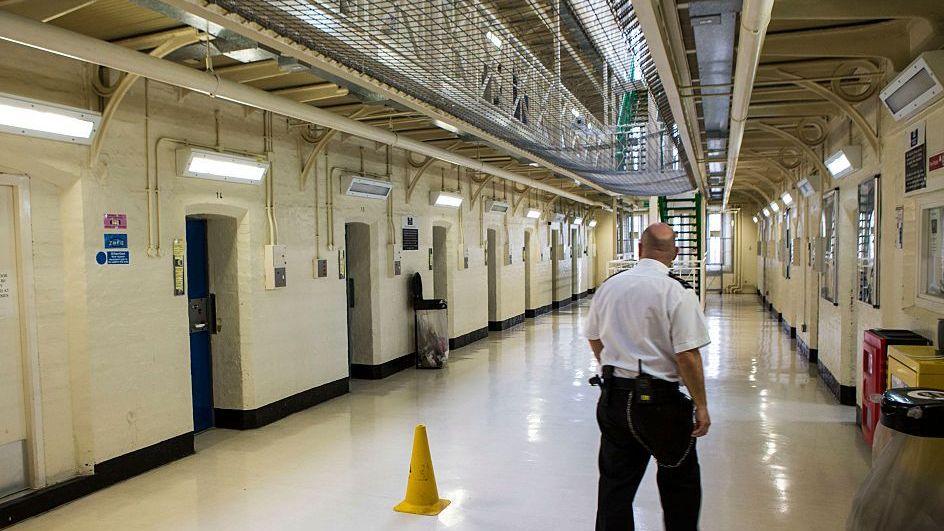

The government is spending £110m on creating more cells in existing prisons in England and Wales as part of its plans to tackle overcrowding.
The money, which will come from existing budgets, will be used to convert unused office space, laundry rooms and storage space into cells, the Ministry of Justice said.
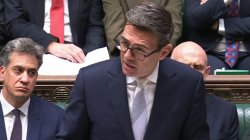
Justice Secretary Alex Norris is due to give more details in the Commons later on changes to the early release scheme, which aims to free up space in prisons as they near maximum capacity.
He told the BBC prisoners being released early did not mean "freedom" for them and victims would have a say in restrictions placed on those criminals.
Norris told BBC Breakfast victims were being sent letters to inform them about criminals being released early and they would have be offered support from a victims' liaison officer.
He insisted offenders would face restrictions on their release, including tagging and bans on attending football games.
Victims' Commissioner Claire Waxman said thousands of victims wanted to know how these early releases would affect them, especially victims of domestic abuse or stalking.
Norris, who is also Lord Chancellor, said the government had delivered more than 3,200 prison places in two years.
He said he suspected the number of extra prison spaces created from freeing up existing space within prisons would be "landing somewhere in the middle" of 200 and 900.
Investment on prison spaces was announced as part of last year's spending review, which covers plans up to 2030. This included a £7bn capital investment to create 14,000 prison places by 2031. The £110m for more prison cells is not a new investment.
Chairman of the Prison Officers' Association, Mark Fairhurst, said: "You can create as much additional space as you like, and build as many new prisons as you like, but where are the staff coming from to supervise people? Nobody wants to be a prison officer anymore."
Norris told BBC Radio 4's Today programme staffing was at the heart of everything and retention critical.

Under the early release scheme some 4,500 prisoners are now expected to start being let out of prison in tranches from October.
The number due to be released was reduced after the government said rapists, those found guilty of serious child sex offences and grooming offences and now those found guilty of manslaughter would be excluded from the scheme.
Prime Minister Andy Burnham told BBC Breakfast at the weekend that anyone convicted of manslaughter would also now be excluded, following a campaign from PC Andrew Harper's family to block the release of two men convicted over his killing in 2019.
Norris told the Today programme the "biggest impact" on creating capacity will come from the deportation of foreign national offenders.
He explained the measure would make it possible to be able to remove foreign offenders at any point after conviction.
Government figures show there were 10,134 foreign nationals held in custody on 30 June this year, 3,283 of whom were on remand.
Measures also include plans to end the Imprisonment for Public Protection (IPP) sentences.
IPP sentences are sentences with no specified end point for prisoners deemed a risk to the public but whose crimes did not merit a life sentence.
On Monday, the Conservatives warned dangerous criminals could be freed under the government's early release scheme.
Shadow justice secretary Nick Timothy told BBC Breakfast he was "very concerned" about ending IPP sentences.
"These people on IPP sentences inside prison are by definition dangerous because their cases have been looked at by the parole board and they've decided it's not safe to release them into the general public.
"Of those who have been released, many of them have been recalled and the probation services have said that we need to keep those people in prison."
An extra £18.9m investment into services for victims will also be announced to Parliament.
The services will provide the specialist emotional and practical support needed to help victims move on with their lives, according to the Ministry of Justice (MoJ).
This money will be reprioritised from existing budgets and will be on top of the £550m already announced by government for this support.
The MoJ also announced that it had signed a contract to start building a new jail in Lancashire for 1,700 hundred inmates.

19 PerFlyer

82 PerFlyer