
The chief executive of a ferry company operating routes from the UK to France, Spain and Ireland has issued an update to customers amid growing concerns over global fuel supplies. The cost and availability of fuel worldwide has been severely impacted following the US and Israel's attack on Iran at the end of February.
The assault triggered a sharp spike in oil prices, sending the cost of petrol and diesel rocketing for motorists while also raising serious concerns for the aviation industry. The significant restrictions placed on the Strait of Hormuz, a vital shipping lane for oil, has proved to be a crucial factor.
With no clear resolution in sight, and the US and Iran yet to reach any agreement to secure the waterway, those planning a summer holiday have grown increasingly worried about the prospect of either steep price rises or cancellations due to fuel shortages.
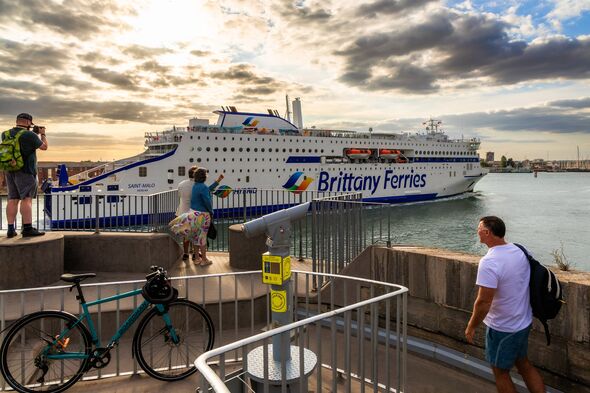
Now, the chief executive of Brittany Ferries, which runs services from Portsmouth, Plymouth and Poole to France, Spain and Ireland, has issued a statement to customers.
Christophe Mathieu, CEO of Brittany Ferries, said in an update on Tuesday: "You don't need me to tell you that the war in Iran is creating uncertainty and anxiety in society. We may not be close to the destruction wrought by bombs and missiles, but we are certainly feeling the consequential pain of this geopolitical crisis. Prices at the petrol pump have soared as the Strait of Hormuz has been strangled. Energy costs are rising. Even mobile networks have warned about potential data rationing.

Read more: Three supermarket wines under £20 'could be classed as fine' says investor
Read more: One-a-day drink 'raises heart disease risk' says cardiologist - not coffee
"In the travel sector you will have seen concerns raised by the airlines. According to their trade body IATA, the industry has perhaps six weeks of kerosene left."
He went on to note that certain airlines had already announced reductions to their flight schedules or increases in fares. However, he stressed, this was not the case for Brittany Ferries.
Mr Mathieu continued: "Their warnings have concerned me and I'm sure they have concerned you. However I want to reassure you: they certainly do not affect Brittany Ferries and destinations served by sea.

"In the face of all the uncertainty, I took the decision to take our more positive message to media last week. In London and Paris I toured TV and radio studios. I wanted as many people as possible to know that there is no chance that Brittany Ferries will run out of fuel. You can be 100% confident that we will get you to your destination.
"Furthermore, we will not add any surcharge to holiday makers' tickets in response to the crisis in the Gulf. Our prices rose by inflation earlier this year, and by inflation alone. There will be no fuel surcharge. We are able to make this price promise to passengers because we took prudent steps to hedge the majority of fuel costs before the crisis began. Hedging means setting a price in advance: in this case around 70 dollars a barrel.
"If the price had fallen, we would have lost out. Our fuel costs would have been higher than the price on the open market. But as the price per barrel rose, and rose significantly due to events elsewhere, our hedging strategy proved successful.
"Hedge your bets is an expression we all understand. Sometimes you win. Sometimes you lose. But I don't think anyone has the right to adopt the posture of a bad gambler, least of all a sector taking people on holiday. The apparent willingness to reach for the war in the Middle East as an excuse to recover losses from in the guise of surcharges, or by cancelling flights that don't make a profit, makes me angry."
He stated that he wanted his company's vessels to be packed with holidaymakers this summer, adding that "everyone should be confident that their holiday company will do the right thing". He stressed that firms must not "pile on the pain of a gamble gone wrong, by levying fuel surcharges".
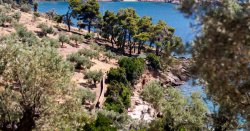
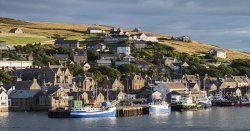
Mr Mathieu added: "Finally, and perhaps most importantly, I want to remind everyone that destinations like Brittany and Cantabria, Cork and Guernsey, are safe, beautiful and unencumbered by over-tourism. They are a million miles from the centre of a conflict we all pray ends soon."