 EPA
EPAThe terrorism threat level in the UK has been increased by the government from "substantial" to "severe" - meaning that a terrorist attack is considered highly likely in the next six months.
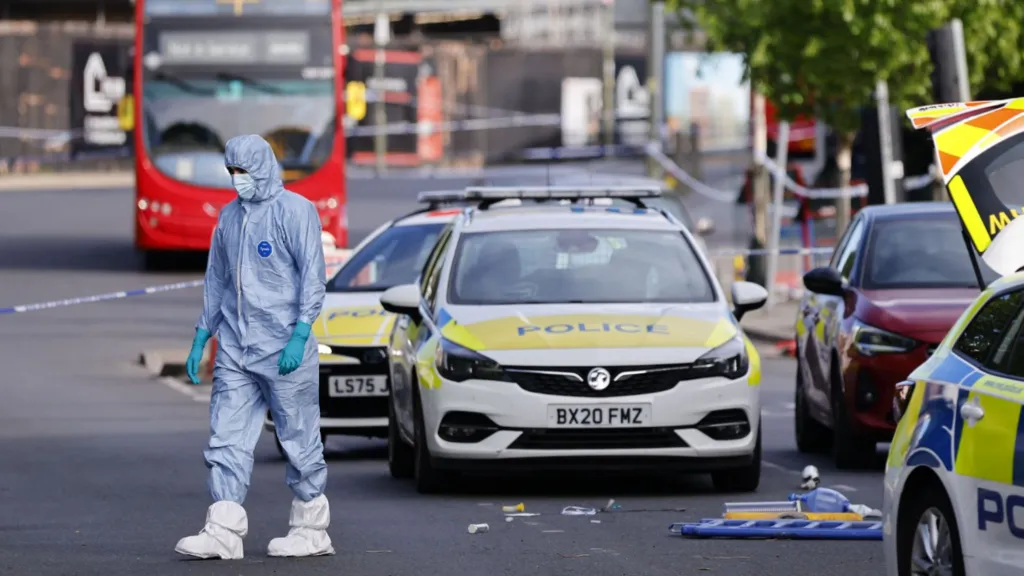
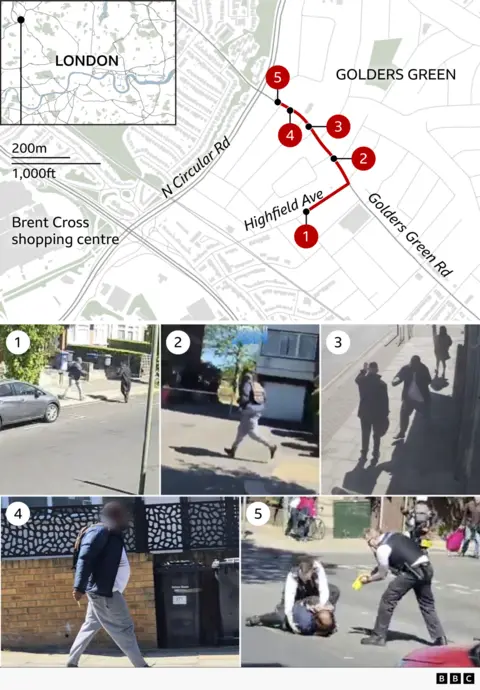
It comes after two Jewish men were stabbed in north London on Wednesday in an attack the Metropolitan Police is treating as a terrorist incident.
The government said on Thursday evening that the increase in the threat level was not solely as a result of the Golders Green attack, but had also been "driven by an increase in broader Islamist and extreme right-wing" threats.
Wednesday's attack is the latest in a string of incidents targeting the UK Jewish community.
The last time the threat level was considered severe was in February 2022.
Home Secretary Shabana Mahmood said the raising of the threat level "will be a source of concern to many, particularly amongst our Jewish community, who have suffered so much".
But she insisted the government "will do everything in our power to rid society of the evil of antisemitism", noting an earlier announcement increasing funding for policing and security around Jewish sites.
"As the threat level rises, I urge everyone to be vigilant, as they go about their daily lives, and report any concerns they have to the police," Mahmood added.
The head of the Met's counter-terrorism unit told reporters outside New Scotland Yard shortly after the level was raised that the UK had been "experiencing a gradual terrorist threat for some time".
Assistant Commissioner Laurence Taylor said: "Our casework is increasing across a number of ideologies, and within that, we are seeing an elevated threat to Jewish and Israeli individuals and institutions in the UK.
"We're also working against an unpredictable global situation that has consequences closer to home, including physical threats by state linked actors."
Taylor said police will be reviewing "all events across the country".
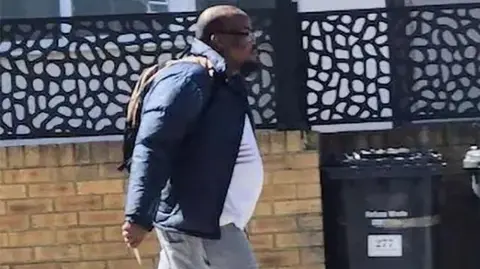
Essa Suleiman, 45, remains in police custody having been arrested on the suspicion of attempting to murder Shloime Rand, 34, and Moshe Shine, 76, in Wednesday's attack.
The Metropolitan Police said he had been referred to Prevent - a key part of the UK's counter-terrorism strategy - in 2020 but the case was shelved later the same year.
Police also believe the suspect may have been involved in an earlier incident in south-east London on Tuesday.
It comes after a spate of incidents in recent months targeting the UK Jewish community.
Two Jewish people were killed in October last year and three left in a serious condition after a car ramming and stabbing attack outside a synagogue in Manchester. One of the men was killed by a bullet fired by police.
Earlier this year in March - near to the scene of Wednesday's stabbings - four Jewish charity-owned Hatzola ambulances were set on fire in the car park of a synagogue in Golders Green.
In recent weeks the Finchley Reform Synagogue in north London was attacked and days later a bottle containing a type of accelerant was thrown through the window of Kenton United Synagogue.
The decision to raise the threat level to the second-highest threat level was taken by security and intelligence experts from the Joint Terrorism Analysis Centre (JTAC) and independently of ministers, the government said.
The UK was last placed on a "severe" terrorism threat level in November 2021, after a bomb ignited outside Liverpool Women's Hospital and the murder of MP Sir David Amess the previous month.
There are five terror threat levels in the UK:
Security Minister Dan Jarvis said people should be "alert and vigilant" but not "alarmed".
He said the public should be reassured that the intelligence services, the police and government were "working round the clock to keep the public safe".
Meanwhile, London Mayor Sir Sadiq Khan said there will be extra police on the capital's streets - including armed officers.
"I want to reassure all Londoners and visitors that we are doing everything possible to protect our city and keep all of our communities safe," he sadi.
The raised level also comes against a backdrop of "increased state-linked physical threats which is encouraging acts of violence, including against the Jewish community", the government added.
Some of the prior incidents have been linked to groups with ties to foreign regimes. Police have not made any such links with Wednesday's attack.
Met Police Commissioner Sir Mark Rowley referred to a rise in "racist and antisemitic hate crime" while speaking in Golders Green on Wednesday.
He said police were aware that some people were being encouraged or paid to commit acts of violence by foreign organisations and hostile states - though he said he could not comment on any live investigations.
Elsewhere on Thursday, angry protesters jeered and heckled Sir Keir Starmer when he visited Golders Green to meet Jewish volunteer organisations and first responders on Thursday.
The prime minister said he understood the "high levels of anxiety and concern", adding: "That anxiety has been there for a very long time, and the appalling terrorist attack yesterday made it worse."
The government announced the extra £25m in funding for increased police patrols and security in Jewish communities. Funding will also be used to put further protections in place around synagogues, schools and community centres.
Sir Keir said the government was now considering introducing fresh measures, including stronger powers to "shut down charities that promote antisemitism" and "prevent hate preachers from entering our country", as well as speeding up sentencing on antisemitic attacks "so there is stronger de facto deterrence".
"We need stronger powers to tackle the malign threat posted by states like Iran," he said, vowing to fast-track legislation.
But he also called on "everyone decent in this country to open their eyes to Jewish pain, Jewish suffering and Jewish fear", saying "far too many people in this country diminish" antisemitism.