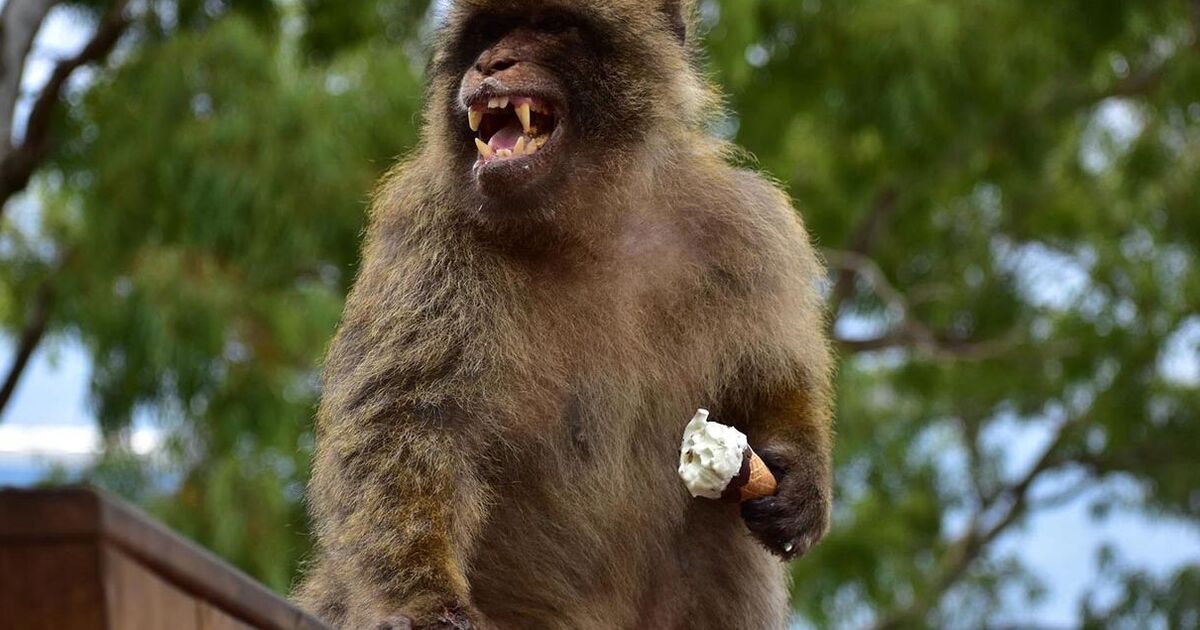

Gibraltar’s famous Barbary macaques have hit upon a clever but dirty solution to the perils of tourist handouts: swallowing soil to settle their stomachs after gorging on chocolate, crisps, ice cream and other junk food. A University of Cambridge study has, for the first time, documented regular “geophagy” – intentional dirt-eating – among the only free-ranging monkey population in Europe. Troops with the closest contact with holidaymakers eat far more soil, with rates spiking during the busy summer season.
Researchers believe the high-sugar, high-fat, low-fibre snacks disrupt the monkeys’ gut microbiome and cause digestive misery. Eating dirt appears to act as a natural buffer, lining the gut, supplying minerals and beneficial bacteria, and limiting the absorption of irritating compounds.
Dr Sylvain Lemoine, a biological anthropologist at Cambridge, explained: “Foods brought by tourists and eaten by Gibraltar’s macaques are extremely rich in calories, sugar, salt and dairy. This is completely unlike the foods typically consumed by the species, such as herbs, leaves, seeds and the occasional insect.”
The behaviour lets the monkeys keep bingeing on calorie-dense treats that they, like humans, find irresistible. Mr Lemoine added: “Soil-eating may allow them to keep consuming food that has negative digestive effects, but is as delicious for them as it is for us.”
The study, published in Scientific Reports, recorded 46 soil-eating events across 98 observation days. The population averages around 12 such events a week – high for primates – with the three groups at the top of the Rock, where tourist contact is heaviest, responsible for more than two-thirds of incidents. One troop with no access to human food was never seen eating dirt.
The habit shows signs of becoming a cultural tradition. Different groups favour different soils: most prefer the distinctive red “terra rossa” clay, but one troop regularly seeks out tar-clogged earth from roadside potholes. About 30% of episodes happened in groups, and 89% occurred with other macaques watching, pointing to social learning.
Mr Lemoine said: “The emergence of this behaviour in macaques is both a functional and cultural one… driven entirely by proximity to humans.”
He compared it to tool-use traditions in chimpanzees, but driven by the human environment.
Local authorities provide the monkeys with proper food at feeding stations and ban visitors from feeding them, but many tourists still offer – or lose – snacks. Junk food made up nearly a fifth of the macaques’ diet during the study period.
While geophagy occurs in some human cultures and is seen in other primates for mineral intake or toxin protection, the Gibraltar macaques showed no increase during pregnancy or lactation, reinforcing the junk-food protection hypothesis. Direct observations even caught animals eating soil shortly after downing ice cream, biscuits or bread.
The findings highlight how living alongside humans is reshaping primate behaviour and culture on the Rock, where the macaques – descendants of North African imports – have long been entwined with Gibraltar’s history and remain a major tourist draw.
Just don’t try the soil trick at home.