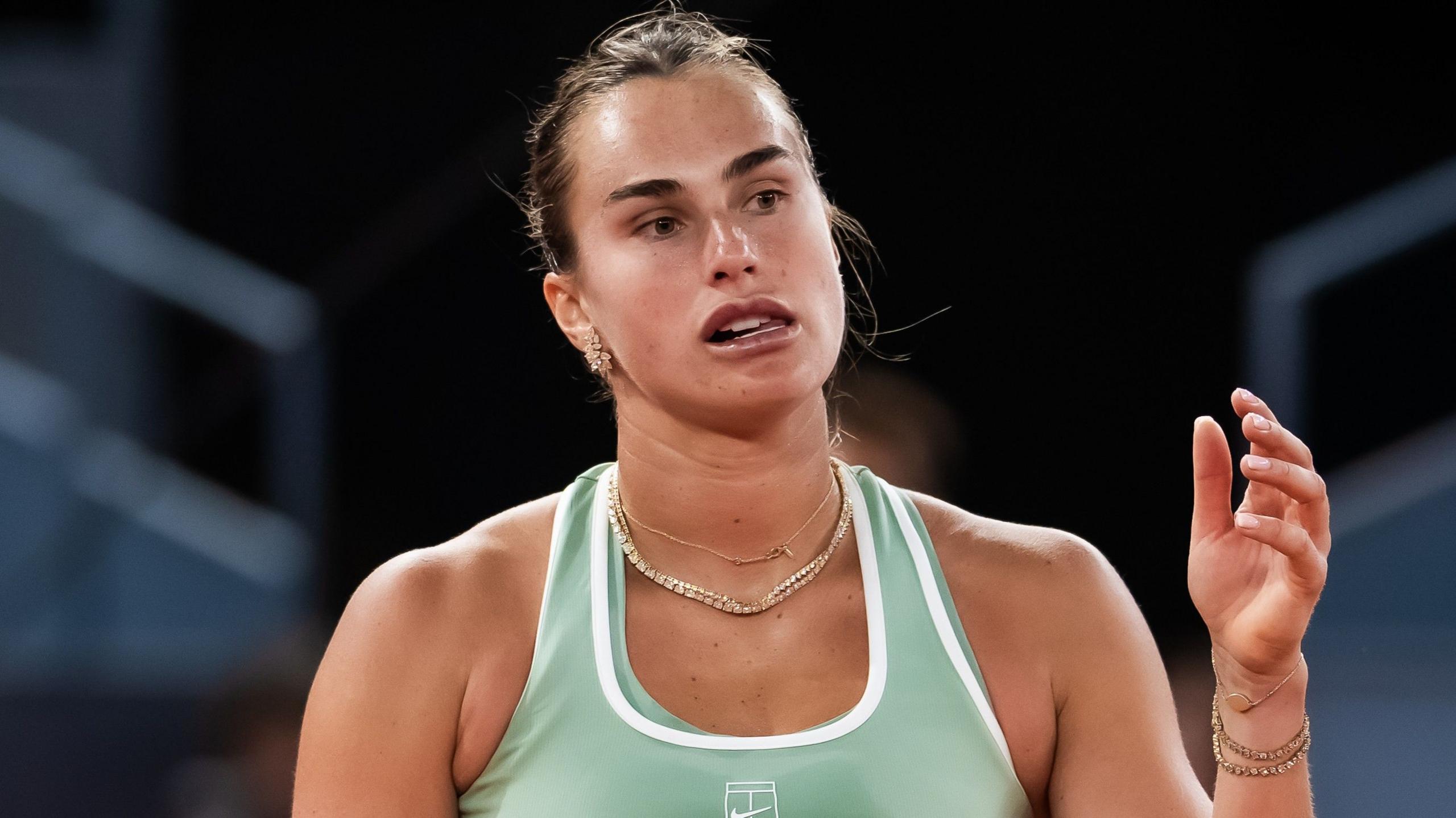

World number one Aryna Sabalenka believes players will boycott a Grand Slam "at some point" because of the ongoing dispute over prize money.
The men's and women's top-10 players are demanding a higher percentage of the revenue generated by the four majors, as well as benefit contributions and a greater say in areas such as scheduling.
But until Sabalenka spoke to the media in Rome before the Italian Open, players had been circumspect on the subject of strike action.
"I think at some point we will boycott it. I feel like that's going to be the only way to kind of fight for our rights," the Belarusian said.
"I feel like the show is on us. I feel like without us there wouldn't be a tournament and there wouldn't be that entertainment."
Fourth-ranked Coco Gauff said she could "100%" see herself boycotting a Grand Slam "if everyone were to move as one and collaborate".
However, world number three Iga Swiatek said she supports the call for increased prize money but a boycott would be a "bit extreme", while Britain's Emma Raducanu said she "would not be a part" of any boycott.
On Monday, a number of leading players expressed their "deep disappointment" at the prize money at this year's French Open.
The fund at Roland Garros has increased by 9.5% - but the players believe that is some way below the 22% of tournament revenue they feel they are entitled to.
"I just really hope that we at some point are going to get to the right decision, to the conclusion that everyone will be happy with," Sabalenka, 28, said.
"I feel like nowadays, we girls can easily get together and go for this because some of the things I feel like it's really unfair to the players."
The financial pot at last year's US Open rose by 20%, with the figure for January's Australian Open nearly 16% higher.
Wimbledon will announce its prize money next month.
French Open champion Gauff thinks strike action would be a genuine possibility if the players come together as one.
"If we all collectively agree, then yes," the American said.
"I wouldn't want to be the only one, but we definitely can move more as a collective.
"From the things I've seen with other sports, usually to make massive progress and things like this, it takes a union. We have to become unionised in some way."
World number two Elena Rybakina said she has not been involved in the campaign, but would go with the majority.
"If the majority say we are boycotting, then of course I'm up for it. It's not an issue,” the Australian Open champion said.
However, Poland's Swiatek said she would prefer continued discussions and negotiations with the majors instead of a boycott.
"I think the most important thing is to have proper communication and discussions with the governing bodies so we have some space to talk and maybe negotiate," the Wimbledon champion said.
"Hopefully before Roland Garros there's going to be opportunity to have these type of meetings and we'll see how they go.
"But boycotting the tournament, it's a bit extreme... I guess we as players are here to play as individuals, and we're competing against each other.
"So it's really hard for me to say how it would work, if it's even there on the picture. For now, I haven't heard anything."
Raducanu, who withdrew from the Italian Open shortly after her news conference on Tuesday with a post-viral illness, said she wanted to play at the majors because "to me, they are tennis".
"It gives you something that money can't and that is what is the most important to me, and what I value the most," she told BBC Sport.
"I wouldn't be a part of [a boycott] but each to their own."
World number five Jessica Pegula has been an articulate advocate of the players' campaign, but virtually ruled out strike action during a BBC Sport interview in Indian Wells in March.
"We love playing the Slams - I don't think anyone's going to strike against the Slams," the American said.
"I just think it's us asking for what we think we deserve, but I do think that if the men and the women can come together - which we have on that front - and keep pushing, there's nothing wrong with us just asking for what we think is right."

114 PerFlyer