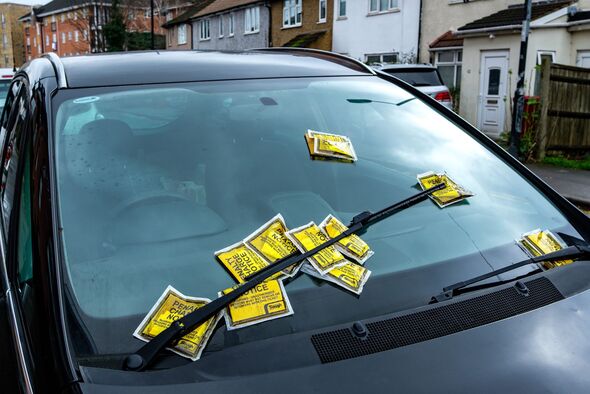

Motorists appealing parking fines are almost certain to fail if they make one big mistake in their documents, new figures show. A record number of private parking fine were successfully appealed to the industry body last year.
Britons submitted 107,202 appeals via the Parking on Private Land Appeals (POPLA) process in the year to October 2025, the first time ever that’s breached 100,000. And the body said there was a significant rise in cancelled fines as the impact of a new appeals charter was felt.
The new figures show 39,522 appeals were uncontested by operator and cancelled; 14,578 contested appeals were successful; 53,102 were refused. Overall 50.5% of appeals resulted in cancellation.
The industry appeals body, POPLA, says it has “observed a growing number of appeals generated using AI”. Despite a record year for successful appeals, however, a lot of the appeals drafted by AI are turned away.
POPLA said: “Many of these appeals are highly generalised and contain misinformation, which typically result in the appeal being rejected.
“Where appellants provide specific, personalised grounds for their appeal, they’re more likely to be successful.”
The report highlights the most common issues behind appeals, including unclear or confusing signage, payment issues and inconsistencies in how parking operators apply their processes.
Ed Dodman, Interim CEO for Trust Alliance Group, which delivers the POPLA service, said: “Parking charges can be an emotive issue for drivers, so it’s vital that they have access to an independent review when they believe a charge is incorrect. The high number of appeals shows the important role that independent redress plays in giving drivers confidence that their case will be considered fairly.
“Our decisions not only resolve individual disputes but also help highlight issues that can be improved across the private parking industry. A clear and consistent appeals process, with independent oversight, is an important part of building trust for both motorists and operators. We look forward to hearing more about the government’s Private Parking Code of Practice later this year.”
Consumer disputes expert Scott Dixon told Sky News: “Confusion is clearly profitable. It’s mindblowing how many people just pay it without question because they think it’s a ‘fine’ - that’s part of the business model.
“That explains why parking charge notices (invoices issued by parking firms) look similar to penalty charge notices (council fines).”
POPLA said it saw “significant activity” with appeals on keying errors, airport drop offs, liability and where AI was used by the operator. If a motorist has made a simple error, such as transposing 0 for an O, parking operators are expected to identify this and not issue parking charges. If an operator does issue a parking charge, they should cancel it in full when a motorist appeals.
If a motorist makes an error that a parking operator cannot identify, for example they enter several digits incorrectly, the operator is entitled to charge up to £20 to cover administration costs.
Proposed changes to parking regulations risk urban areas becoming “gridlocked” and the court system being “overwhelmed”, an industry body has claimed.
The British Parking Association (BPA), which represents parking operators, earlier this year warned about the “unintended and avoidable consequences” of the Government’s planned code of practice for the sector in Britain.
A Ministry of Housing, Communities and Local Government (MHCLG) consultation document on the proposals stated it is considering banning the addition of debt recovery fees to parking tickets.
These fees – currently capped at £70 – are charged when parking operators use debt recovery agencies to attempt to collect money for unpaid tickets.
The consultation also sought views on the cap on parking tickets, which is currently £100 with a 40% discount if paid within 14 days.
The BPA claimed banning debt recovery fees would result in car park operators taking more cases to court as that would be their “only option left” to pursue drivers for tickets that have not been paid.
It also expressed concern that an “insufficient” maximum limit on parking tickets would create a “parking free for all” as it would reduce the deterrent for drivers ignoring parking rules.
BPA chief policy and engagement officer Alison Tooze said: “We fully support and welcome the Government’s code of practice. However, it is our responsibility to warn against unintended and avoidable problems.
“The Government code framework has good intentions. However, we face an operational reality where we could see ‘Carmageddon’ in towns and cities and the already struggling court system being completely overwhelmed.
“We absolutely do not want this to happen. The code is being developed with the goal of protecting decent drivers, vulnerable road users and communities, yet there is a real danger that it could have the opposite effect and bring unintentional chaos.
But the RAC previously warned that the threat of debt recovery fees can make drivers pay “unfair” parking tickets they would otherwise challenge.