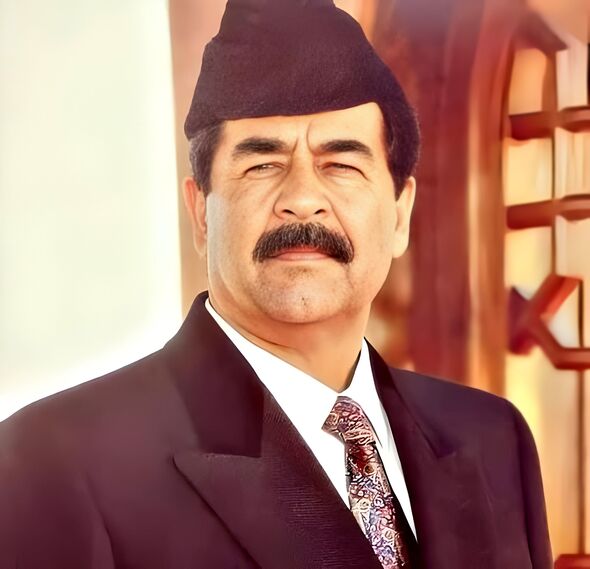

The son of a former captain in Saddam Hussein's security forces has allegedly been granted asylum in the United Kingdom after a judge ruled that returning him to Iraq would expose him to a genuine risk of being killed by Shia paramilitary groups.
Neither the man nor his father can be identified following the tribunal proceedings. He was reportedly just five years old when the family uprooted to the UAE, driven out by the kidnapping of his uncle and a campaign of death threats against those closest to them. He arrived in Britain in 2018.
The tribunal heard that his father had held the rank of captain in the Iraqi army, serving within Hussein's security apparatus and holding membership of the Sunni Muslim Baath party that governed Iraq until American and British forces overthrew it in 2003.
In the years that followed, army officials and Sunni Muslims were systematically targeted by Shia paramilitary groups. One of those groups, known as Badr, now forms part of the Iran-backed Popular Mobilisation Forces, and is said to have been responsible for threatening the family and abducting the asylum-seeker's uncle.
Although the Baghdad property was eventually sold, the tribunal was reportedly told that militia threats continued to be directed at that address as late as 2020. With nobody left in Baghdad and only distant relatives in Kirkuk, between whom all communication has broken down, the man would have no meaningful support network to return to.
Read more: Mother of murdered woman demands all illegal migrants face 'Rhiannon's law'
Read more: Police chief demands naval blockade in Channel 'Stop them on the water'
His route to Britain began when he left the UAE as a teenager to take up a place studying aeronautical engineering at Glasgow University, entering the country legally on a student visa, reports The Times.
When his degree concluded in 2022, he lodged an asylum claim, telling the tribunal he "fears Shia militias in Iraq." Saddam Hussein, under whose regime his father had served, was executed in 2006, aged 69, having been convicted of crimes against humanity.
The Express understands Upper tribunal judge Paul Lodato ruled that the asylum-seeker should not be deported, finding there was "a real risk that the threat to his life will be acted on by Shia militia." The tribunal granted him refugee status on the basis of the dangerous "profile" he carries as the son of a former Baathist officer, states the report.
The judge wa said to have noted that the man had been "a little boy" when he left Baghdad and had been "entirely dependent on his Baathist parents" at the time.
If returned to Iraq now, the judge reportedly found, he would be "a stranger, with no family, no network of support, and no prospect of re-documentation within a reasonable time," creating "very significant obstacles to his reintegration."
The judge also warned that if the man were sent back, "he will rapidly be noticed," and that the threat to his life from Shia militia remained live and credible, states the report.