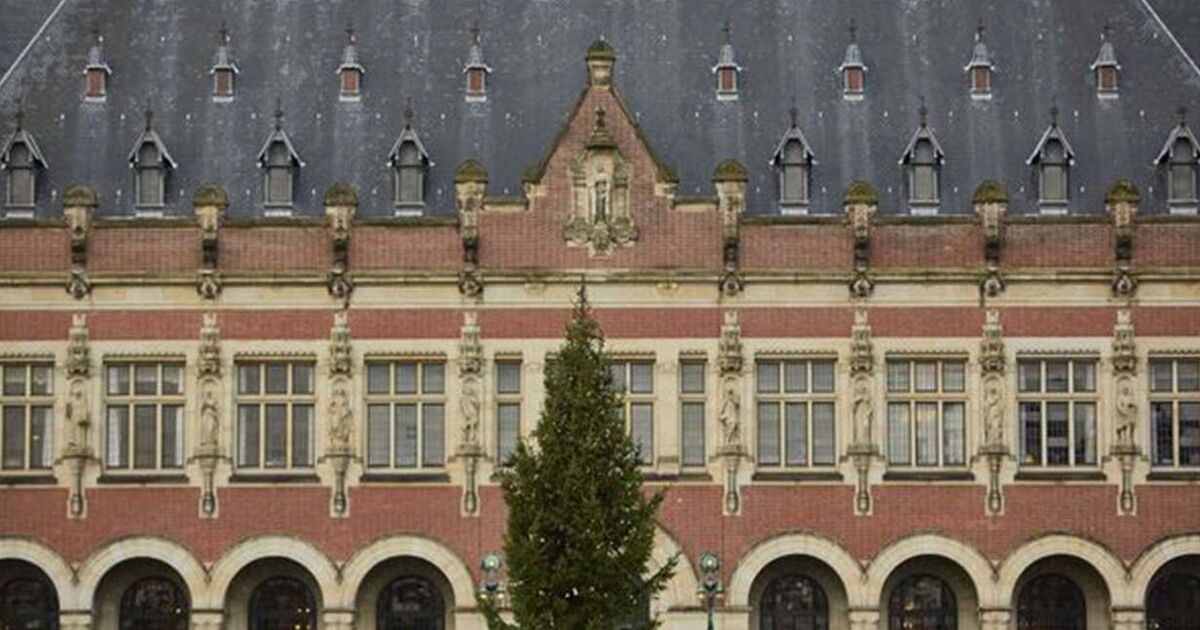

A district court in The Hague sentenced a former pro-Assad militia member to 26 years in prison on Monday for crimes against humanity, including the torture and rape of prisoners in Syria more than a decade ago. The 58-year-old man, identified in court only as Rafik A. to comply with Dutch privacy rules, was convicted of involvement in the torture, rape or other sexual abuse of eight victims. He acted either directly or by ordering others while serving as an interrogator for the National Defence Forces (NDF) in Salamiyah, central Syria, in 2013 and 2014.
The NDF was a pro-government militia that supported the regime of former Syrian President Bashar al-Assad, who was ousted in December 2024 following a rebel offensive. Presiding judge Wim van Hattum stated in the ruling summary that the court had established Rafik A.’s role and responsibility for these acts. During the trial, which began in April, Rafik A. repeatedly denied the allegations. He accused witnesses of lying and claimed the case against him was fabricated.
Prosecutors had initially sought a 30-year sentence on 25 charges, including torture, sexual violence and rape as crimes against humanity, but several charges were dropped due to insufficient evidence.
The verdict marks the first Dutch conviction for atrocities committed by pro-government forces in Syria. It is also the first time a Dutch court has convicted someone of sexual violence as a crime against humanity. The Commission for International Justice and Accountability (CIJA) supported the prosecution by providing contextual analysis and witness information.
Rafik A. had lived in the Netherlands for several years as an asylum seeker after arriving in 2021. He was arrested in December 2023 in the eastern town of Druten, where he had settled with his family. Dutch authorities invoked universal jurisdiction, which allows prosecution of serious international crimes committed abroad when the suspect or victims are present in the country.
The case forms part of a broader European effort to hold Assad-era officials accountable. Similar proceedings have taken place in Germany and other countries. Victims described harrowing experiences of abuse in detention facilities under NDF control in Salamiyah, Hama province.
Legal experts have described the ruling as a significant precedent, particularly for addressing sexual violence in the context of state-sponsored repression during the Syrian conflict. The court noted that the sentence reflects the exceptional gravity of the offences and the suffering inflicted on the victims.
Rafik A.’s conviction comes amid heightened scrutiny of individuals who fled Syria and sought refuge in Europe while allegedly implicated in regime abuses. Dutch prosecutors emphasised that such cases send a clear message that there is no safe haven for those responsible for international crimes.
The judgment is expected to be studied closely by Syrian diaspora communities and human rights organisations tracking accountability efforts following the fall of the Assad regime.