
An ancient religious text excluded from most Christian biblical canons has sparked debate over whether it contains a warning about the Antichrist and the downfall of corrupt rulers.
The more than 2,200-year-old Book of Enoch describes a mysterious group known as “the kings and the mighty”, whose wealth, influence and rejection of God lead them towards a final judgment.
The Antichrist is a figure in Christian theology generally understood as a powerful deceiver who opposes Jesus Christ and leads many away from the faith before the end of the world.
While some modern interpreters have linked the passages to the Antichrist, the text itself does not explicitly identify a single individual by that name.
Instead, the Book of Parables, the second section of 1 Enoch, describes a vision in which powerful rulers known as “the kings and the mighty” are judged by the “Son of Man”.
The passages, spanning Chapters 46 through 63, have been interpreted by some readers as a warning about corrupt systems of power that oppose God rather than a prediction about one future individual.
The interpretation of the passages can be divided into four movements, each showing another stage in the rulers’ rise, power and eventual downfall.
The first introduces “the kings and the mighty” as wealthy and influential leaders who reject God, persecute the faithful and place their trust in their own riches.
The second describes the arrival of the “Son of Man”, who was chosen before creation, and the moment when the rulers realise they have rejected God’s chosen figure.
The third uses imagery of six mountains made from iron, copper, silver, gold, soft metal and lead to represent the collapse of earthly power and wealth.
The final movement describes the rulers standing before the “Son of Man” on the day of judgment, where their pleas for mercy are rejected and they face punishment for their actions.
Many scholars interpret the imagery as symbolising the temporary nature of human kingdoms, wealth and political authority.
The modern Bible contains 66 books in many Protestant traditions, although the number varies between Christian denominations.
Alongside those accepted scriptures, more than 70 ancient Jewish and Christian writings circulated among early communities but were not included in later biblical canons.
One of the most famous of these texts is the Book of Enoch, which expands on stories involving fallen angels, giants and the origins of demons.
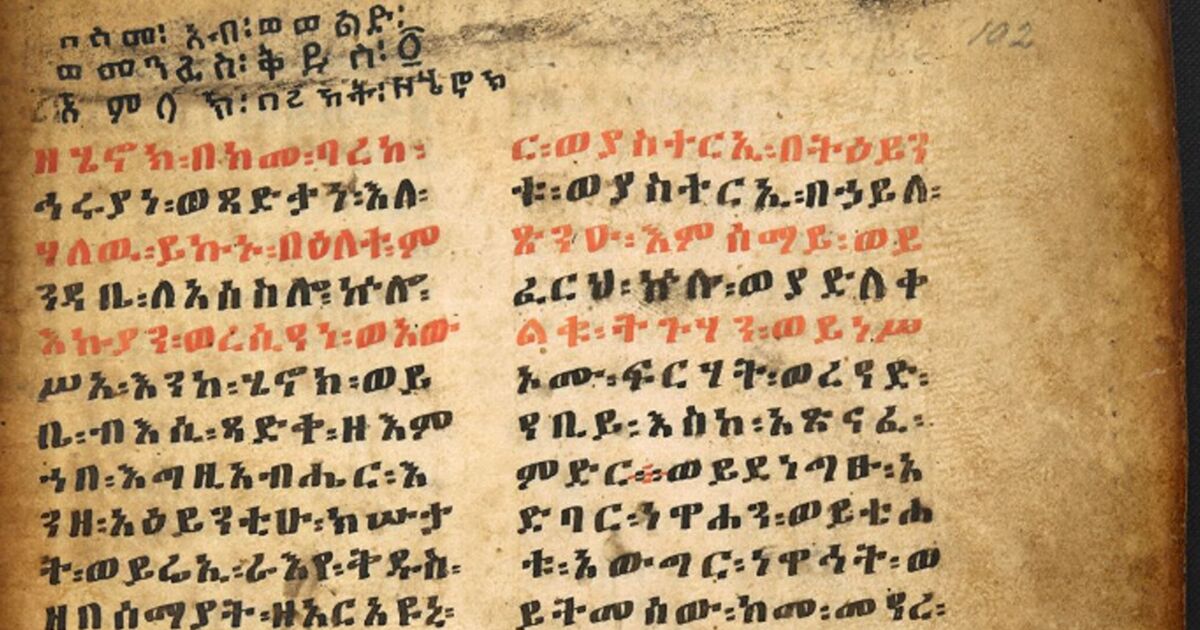
Fragments of the Book of Enoch written in Aramaic were discovered among the Dead Sea Scrolls in caves at Qumran in the Judaean Desert, confirming that the text was circulating centuries before Christianity.
The link between the Book of Enoch and the Antichrist comes from later interpretation rather than a direct statement in the ancient text.
A discussion on the YouTube channel The Hermon Codex suggested the “kings and the mighty” could represent a corrupt system connected to end-times beliefs.
Some scholars have argued that differences between English translations of Enoch have affected how strongly the rulers are described.
Translations by Michael Knibb and Ephraim Isaac render the passages more literally, describing rulers whose “power rests upon their riches”, who “deny the name of the Lord of Spirits” and persecute the faithful.
Biblical scholar George W E Nickelsburg identified the “kings and the mighty” as corrupt political and religious rulers rather than Satan or the fallen Watchers.
That interpretation has led some readers to argue that Enoch presents the Antichrist idea as a recurring pattern of unrighteous power rather than a single individual.
The first movement begins in Chapter 46, where Enoch describes a heavenly vision involving the Ancient of Days and the Son of Man before turning his attention to “the kings and the mighty”.
The text says these rulers will have faces filled with shame because they gained power through wealth, rejected the Lord of Spirits and persecuted the faithful.
1 Enoch 46:7 reads:
“These are they who judge the stars of heaven, and raise their hands against the Most High, and tread upon the earth and dwell upon it.
“All their deeds manifest unrighteousness, and their power rests upon their riches.
“Their faith is in the gods which they have made with their hands, and they deny the name of the Lord of Spirits, and they persecute the houses of His congregations, and the faithful who hang upon the name of the Lord of Spirits.”
The second movement appears in Chapter 48, where the “Son of Man” is described as having been chosen before creation.
The “kings of the Earth” are warned that on the day of judgment they “will not save themselves” because they denied “the Lord of Spirits and his Messiah”.
The third movement appears in Chapters 52 and 53, where Enoch sees six mountains made from different materials.
According to 1 Enoch 52:6, an angel tells him:
“And all these things which serve those who take lead in this world and cause oppression shall melt like wax before the fire... and become powerless before the feet of the Elect One.”
The final movement unfolds in Chapters 62 and 63, where the rulers are gathered for judgment.
1 Enoch 62:3 reads:
“And there shall stand up in that day all the kings and the mighty, and the exalted and those who hold the earth, and they shall see and recognise how he sits on the throne of his glory.”
The text then describes the rulers falling before the Son of Man and asking for mercy.
However, their pleas are rejected, and they are delivered to the angels for punishment because they oppressed God’s children and the faithful.
Chapter 63 describes the rulers admitting their guilt, including the passage:
“We have not confessed before him... but we have trusted in the sceptre of our dominion and of our glory.”
The text continues:
“In the day of our suffering and of our trouble, he will not save us... All our sins are truly without number.”
Many scholars interpret the passage as a warning that human empires built on wealth, pride and oppression may appear permanent but will ultimately fail.